I was under the impression that the speed of the CPU was controlled separately on the IIsi by its own clock chip? (I mean, I figured the PDS slot might be an issue, but the rest of the computer I assumed was uneffected.)
Do you know what other stuff is controlled by and/or messed up by the CPU clock chip?
From what I recall everything but the video pixel clock runs off the 40mhz (/2 for 20mhz) clock. Video pixel clock can be either Portrait, VGA, or 512*384, which are the 3 other oscs.
So by increasing the 40mhz clock you are running ROM, RAM, SCSI, IO, PDS faster. 25mhz operation is a gimmie, it should always work since the chipset was designed to run that fast in the IIci. But PDS cards may or may not play at that speed depending on how their internal logic was designed, and once you go faster than 25 there's a possibility that other things stop working also. I suspect there are other threads detailing what starts going wrong at what speeds.
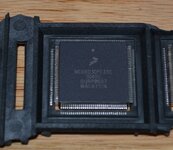
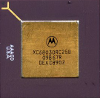
What astonishes me is that there is a little man somewhere making fake chips for a living. Apparently…. How many people are still buying 68882s?
*cough*

From what I've heard, it's the thinking that "new" clean looking chips are worth more. The logic seems sound.... nobody wants to see a manky looking chip in their new product if they can help it.
For my use case, I absolutely need to know what die mask is used since early chips will not operate at 50mhz where later ones will. So, I'd rather have chips with some scratches that I can trust to operate at the required speed (0% failure rate so far) instead of a 35% failure rate as measured with a batch of 40 remarked chips. With that said, the failure rate of the remarked chips was dictated purely by mask of the chip; all that passed initial testing in turn all passed full burn-in testing, and I have no concerns that they will fail in the long run.