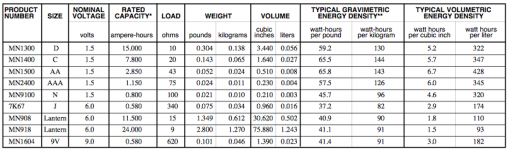
Floofies is right with the range of mAh for AA batteries, but it is probably worth qualifying that is for the carbon-zinc/zinc chloride type, not alkaline AAs. The 400-1500mAh range will typically say "Standard", "Heavy Duty", "Super Heavy Duty", or "Carbon Zinc". This type of battery is best suited for consistent low drain applications such as clocks, remotes, backup batteries, as well as intermittent moderate drain uses such as flashlights. My concern with using them in modern times is that these tend to be the absolute cheapest batteries available, so quality control issues could result in premature leakage. Look for the better brands here as the generics could be trouble!
Alkaline AAs start at about 1800mAh capacity and go up to about 3000mAh. They tolerate intermittent high drain applications better than carbon zinc, as there is typically more instantaneous current. This is why many digital cameras and other high drain electronics will not even power on with the carbon zinc AAs; there's not enough initial current available from those batteries to handle the load of powering up the electronics and running motors, backlights simultaneously. I have had trouble with some well regarded store brand batteries leaking prematurely of late- namely Costco's Kirkland ones. I've had good luck with Panasonic, Varta, Duracell, and Energizer- rarely seeing leakage with their alkalines.
The Rayovac 840, 841, and 844 are often replaced interchangeably. I believe all of them have been discontinued for some time now, so any Rayovac pack purchased new will be very old stock with limited life left. The RTC (real time clock) and PRAM (parameter random access memory) use a tiny trickle of current to run when the computer is not connected to AC supply. This applies to the machine being either unplugged and/or having the physical power switch in the O/off position. When the computer is shut down, but switched on, the RTC and PRAM are powered by the power supply, not the battery. This is why these batteries tend to have wildly different life spans. If a computer is rarely plugged in, has its power switch turned off after each use, or is on a switched outlet or power strip that is often turned off, the Rayovac packs might only last a year or two. If the machine is plugged in with the power switch on most of the time, the battery might last five years or more. I've replaced one that only just died after eight years where the Performa 6360 was mostly shut down, but plugged in and switched on.
Many AA/AAA alkaline batteries have a 5-7 year shelf life, with some advertising 10 years- this is when not connected to anything, particularly not in series. I would expect alkaline AA/AAA cells to almost certainly leak in a low current situation if left installed for 10 years. As such, I'd be hesitant to suggest installing these inside the case. I expect it would be trivial to remotely locate a 3 cell holder with AAA or AAs installed in most cases. I like to switch off my CC Mystic regularly, so I plan on setting the holder behind it, or using a Command adhesive velcro strip to attach it to the back of the case so it doesn't get knocked off the desk. I'll probably use alkaline or good carbon zinc AAAs as I'd rather have them go dead and get replaced easily when I notice the clock is wrong and 32-bit addressing is off, than have batteries that keep going for years until they leak near my Mac. Carbon zinc AAAs have an average 550mAh capacity, alkalines 1200mAh at very low discharge rates.