Hi! Looks like after all this time my account has finally gotten validated.
TL;DR I bought a dual 867 MDD new when I was a teen and have had it my whole life. This machine is ridiculously sentimental to me, so appreciate the guidance.
I recently completely disassembled it and removed 37 pounds of dust from the internals and am doing upgrades on it. I have a couple sanity questions I'm hopeful for answers to. The end result will be a 4600 TI, SSD, 2GB of new OWC ram for the MDD, atx power supply, cpu upgraded machine. Most of this will be easy, thanks to some of the videos on YouTube from Jeff, Action Retro, etc.
My initial plan was to use the original 133mhz board and install a Dual 1.6ghz Sonnet MDX.
I also have a 167mhz FW400 board and a dual 1.42ghz Apple OEM processor, but no copper heatsink.
Questions:
1) Is the 2mb backside cache on the 1.42 OEM CPU far more valuable than the slight mhz advantage and cooler temperatures of the Sonnet's Freescale chips? I'd have to locate a copper heatsink if so, not the end of the world but am curious.
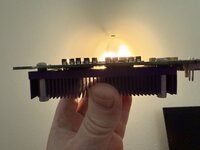
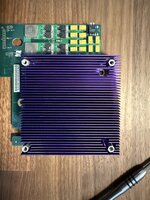
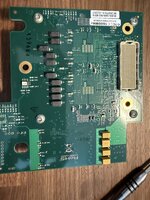
2) I cannot figure out for the life of me how to get the heatsink off of the Sonnet MDX Duet card to do a repaste. The fan assembly came off easy enough, and I have the necessary bits to remove the screws on the bottom of the card which appear to be holding the heatsink on the pcb but can't get the screws to turn. If anybody has repasted one of these, my google searching so far has turned up nothing.
3) I've not soldered so am hesitant removing the resistor on the 133mhz board to enable 167mhz operation. Similar to the first question, is there tangible benefit from using the 167mhz motherboard (for either CPU I go with) or is there little value in the 33mhz faster bus speed? I have the 133mhz motherboard flashed for the sonnet card and can flash the 167mhz one if needed.
Thanks so much for any advice, thoughts, etc. This MDD is legitimately one of my prized possessions and I've been contemplating recording the entire re-assembly process etc for future help to anybody else since so much of what is out there now is old.
TL;DR I bought a dual 867 MDD new when I was a teen and have had it my whole life. This machine is ridiculously sentimental to me, so appreciate the guidance.
I recently completely disassembled it and removed 37 pounds of dust from the internals and am doing upgrades on it. I have a couple sanity questions I'm hopeful for answers to. The end result will be a 4600 TI, SSD, 2GB of new OWC ram for the MDD, atx power supply, cpu upgraded machine. Most of this will be easy, thanks to some of the videos on YouTube from Jeff, Action Retro, etc.
My initial plan was to use the original 133mhz board and install a Dual 1.6ghz Sonnet MDX.
I also have a 167mhz FW400 board and a dual 1.42ghz Apple OEM processor, but no copper heatsink.
Questions:
1) Is the 2mb backside cache on the 1.42 OEM CPU far more valuable than the slight mhz advantage and cooler temperatures of the Sonnet's Freescale chips? I'd have to locate a copper heatsink if so, not the end of the world but am curious.
2) I cannot figure out for the life of me how to get the heatsink off of the Sonnet MDX Duet card to do a repaste. The fan assembly came off easy enough, and I have the necessary bits to remove the screws on the bottom of the card which appear to be holding the heatsink on the pcb but can't get the screws to turn. If anybody has repasted one of these, my google searching so far has turned up nothing.
3) I've not soldered so am hesitant removing the resistor on the 133mhz board to enable 167mhz operation. Similar to the first question, is there tangible benefit from using the 167mhz motherboard (for either CPU I go with) or is there little value in the 33mhz faster bus speed? I have the 133mhz motherboard flashed for the sonnet card and can flash the 167mhz one if needed.
Thanks so much for any advice, thoughts, etc. This MDD is legitimately one of my prized possessions and I've been contemplating recording the entire re-assembly process etc for future help to anybody else since so much of what is out there now is old.