


I have a 600 MHz Graphite iMac G3, which apart from the typical brittle plastic is in pretty good condition. I really like this machine because the CRT is nice and sharp, obviously it looks cool and it's quick (in OS 9). What's more, it works reliably with an SSD and the Startech SATA-IDE adapter unlike the tray-loaders I have.
Yesterday I tried to boot it up and got the dreaded three beeps after the chime, meaning 'No RAM banks passed memory testing'. No amount of changing memory helped and I started to feel quite sad in a way I think many vintage computer enthusiasts have experienced, knowing that these machines won't last forever.
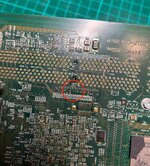
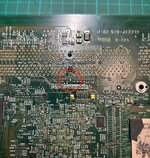
I decided to take the logic board out for a look, expecting nothing... but I noticed a tiny spot of corrosion on some resistors near the RAM slots on the other side of the board. Some testing showed that one of them (R554) had gone open circuit and a small trace nearby had rotted. I desoldered the resistor, cleaned the board and managed to knock off one of the pads. There probably wasn't much left of it anyway.
Fortunately there was a via nearby that I could solder to, and even more conveniently the distance from this via to the other pad was just the length of the 0805 resistors I keep in stock normally, so I soldered one of those in on its side. Not my prettiest repair, but it got the computer working again for no cost so I am happy!
Before and after pictures are attached. I just thought I'd post this in case anyone else had the same problem; I found nothing about it online (except for people whose RAM had actually gone bad). Next to fix my 400 MHz one (completely dead so probably power supply) and finish my PowerBook G4 cache replacement project (that one is for the summer). The last adventure was replacing the speaker drivers...
Yesterday I tried to boot it up and got the dreaded three beeps after the chime, meaning 'No RAM banks passed memory testing'. No amount of changing memory helped and I started to feel quite sad in a way I think many vintage computer enthusiasts have experienced, knowing that these machines won't last forever.
I decided to take the logic board out for a look, expecting nothing... but I noticed a tiny spot of corrosion on some resistors near the RAM slots on the other side of the board. Some testing showed that one of them (R554) had gone open circuit and a small trace nearby had rotted. I desoldered the resistor, cleaned the board and managed to knock off one of the pads. There probably wasn't much left of it anyway.
Fortunately there was a via nearby that I could solder to, and even more conveniently the distance from this via to the other pad was just the length of the 0805 resistors I keep in stock normally, so I soldered one of those in on its side. Not my prettiest repair, but it got the computer working again for no cost so I am happy!
Before and after pictures are attached. I just thought I'd post this in case anyone else had the same problem; I found nothing about it online (except for people whose RAM had actually gone bad). Next to fix my 400 MHz one (completely dead so probably power supply) and finish my PowerBook G4 cache replacement project (that one is for the summer). The last adventure was replacing the speaker drivers...
Attachments
Last edited:


