Until the population increases and you depend on those optimizations, it's like raising the barrier on the high jump.These things make the system more resiliant.
You should be able to count population growth as bad management but it's not PC.


Until the population increases and you depend on those optimizations, it's like raising the barrier on the high jump.These things make the system more resiliant.

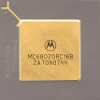
http://cultofmac.com/mit-designers-resurrecting-apple-ii-for-india/2474UPDATE: The MIT design team referred to in this post is basing its design not on the Apple II, but on the Nintendo Entertainment System, which used the same processor chip. We regret our error, which was originally reported by The Boston Herald article to whcih our post was linked. Thanks to David Zeiler at The Baltimore Sun for the clarification.
I still want one! Place your orders by PM, folks, I'll be back in India some time in the next 12 to 18 months.Newly manufactured 8-bit computers are currently available in India for a cost as low as $10. / connecting to an existing TV / a full keyboard, mouse, 3 game controllers, and a suite of educational software and games. / a user can program in BASIC within 2 clicks of turning on the computer. We wish to make use of these existing TV-Computers as a target platform

Having basic computer skills means nothing. If you want a job working with a computer you need to be an advanced user. Just knowing how to use a mouse and windows or a basic office package does not help you to get a job anymore because it is assumed everyone knows those things. If you want a job, you need to know a lot more.Which countries are we talking about again? You seem to be missing my basic point - what about countries with jobs, with adequate water and food supplies but a poorly educated population? Countries aren't homogenic either. The problems you speak about might exist in the country side in same e.g. South American countries, but not amongst members of the lower middle class in the larger cities there.Education means nothing when you live in a country with no jobs. [...] Better to teach them how to grow food and sanitize water first. Those are skills they can actually put to use.
I've had this discussion a online million times regarding the OLPC. Why is it that some people find it so hard to accept that there are places on Earth where all these basic problems of food, water, electricity, literacy and basic infrastructure are solved, and cheap computers - ie., tools for further education - will actually do more good than just about anything else?
Eh? Are there any jobs left that don't involve using a computer?What would these kids do with computer skills? Having basic computer skills doesn't even mean much in western societies anymore.
So if kids use computers at an early age will theyI don't understand how that in any way, shape, or form constitutes an argument against getting computers to kids everywhere?

I did notice that this evening. Shame, as it would have been really cool had they actually based it off the Apple II. Ah well, still cool enough.http://cultofmac.com/mit-designers-resurrecting-apple-ii-for-india/2474UPDATE: The MIT design team referred to in this post is basing its design not on the Apple II, but on the Nintendo Entertainment System, which used the same processor chip. We regret our error, which was originally reported by The Boston Herald article to whcih our post was linked. Thanks to David Zeiler at The Baltimore Sun for the clarification.
I had a feeling that reporter knew sweet FA about computers.

Depends on the kid. Some kids will do marvellous things with computers, some won't.So if kids use computers at an early age will they
(a) all become Nobel prize winners at extreme cleverness and solving the worlds problems in peace and harmony
( B) become spoonfed dummies with poor social skills who are incapable of critical or original thinking and have no idea on what research actually is.

You should be able to do a ZX81 for $12, and solar handheld calculators for about $2.Now. Can we get back to some intelligent, constructive discussion, please?


Teachers are in of a bit of a fickle here. The current pedagogical fad is based a lot on constructivism. Constructivism is one means of coming up with novel ways of doing something, because the student is expected to construct their own knowledge. Usually they are given the tools to figure something out, then any rational solution is considered valid. There are other ways of going about it, but constructivism seems to be the main way to use the different skills that students have. (There are teachers who will teach the content then assess solutions based on their validity rather than what they are taught, but the general outcome is that most students are working things out the same way because their understanding is based upon the instruction.)If you ever programmed you know that given a task there are a number of ways of doing it. Schools seems to teach the one "good" way to do something, and all others are inferior. When a kid comes up with a novel way of doing something and a student tells him it is the wrong way you kill creativity. I also don't like the memorization followed by multiple choice tests, they just get kids to memorize and puke the answer up on command when they see it.
I don't think any such thing. Of course the circumstances are not the same, nor do I believe in recreating anything. I think this is interesting, and the street will find its own use for things, as always, and no doubt already is. The 21st century Bombay street, that is, not the 1970s upper-middle class Western suburban cul-de-sac. The well-meaning MIT team may or may not have some impact.If you think that a $12 computer is going to recreate that "golden age" of technophilia, I would assert that your idea is naive.
And yet, some do. Let the end user decide.Some of the problems out there don't call for technological solutions.
It's all very Western centric, really, isn't it.Kids are treating computers like cell phones and game systems. / anyone can stick a simple programming language / downloadable off of the Internet.