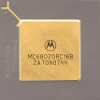
From going over the Dev Note carefully, it looks like it would be really difficult to do, the MMU table in the ROM would be easy to handle, but apparently the total RAM amount is reported by the EAGLE gate array, so that would need to be completely reverse engineered, figure out how it come up with the total RAM, how it reports it, how it can be expanded... I can see why no one ever bothered...
This is me being too lazy to look up that other thread and see if the answer was already in there, but I did google up the Classic II DevNote and I'm left wondering something: do the "neutered" LC-based systems actually use the MMU on the 68030 to manage their memory map?
I vaguely recall why/how the "real" Macintosh II-based Macs equipped with RAM sockets that can take different-sized SIMMs use the MMU instead of dedicated hardware to "pack down" the RAM in physically dis-contiguous banks into a logically linear chunk for the MacOS (and also how they mask/juggle parts of the memory map when they're set to operate in 24 bit addressing mode), but... the LC was designed to use both an MMU-less CPU (the 68020) and only has two SIMM sockets, so would it not be logical to just hardcode the limited mapping possibilities into the system ASIC and switch between them by tickling a register? It seems a little suspicious how the Classic II devnote specifically claims it's the EAGLE's responsibility to provide memory mapping functionality.
So... yeah, I'm genuinely curious if the 68030's MMU is used in these "LC-type" machines for performing any address translation work like it does in the "bigger" models, or if it's literally completely redundant unless virtual memory is enabled. (The only other 68020-based Mac, the original Mac II, came with that dingus that could do address translation but no paging in the 68851 MMU socket; apparently that thing was at least partially compatible with the 68851 because the same ROM code can run a Mac II with either installed... but I don't see any reason why Apple would have bothered with building something that sophisticated into the LC's system ASIC since it was specifically designed to *not* be upgradable to an MMU. Of course, that everything other than the original LC shipped with an MMU anyway so... I have no idea what they were thinking.)
Anyway, as Techknight says, since all these machines other than the original LC *do* have programmable MMUs I don't see any real barrier in principle to hanging additional RAM directly off the CPU bus (although there are practical issues, like how doing so would probably call for having to desolder the CPU in order to stick in a daughterboard) that's physically mapped to the A25 and higher address lines, but there would be some devils in those details. The biggest issue I see is according to the memory map in the Classic II devnote the framebuffer is actually located at *just under* the 10MB boundary in *both* 24bit and 32bit address mode. (Because the Classic II steals system RAM for video, unlike the SE/30 which has a tiny chunk of dedicated VRAM mapped like a NuBus card.) This means that you would have to use either the MMU or some hardware on your daughtercard to relocate that upwards so MacOS can have the contiguous chunk of RAM it wants, and you'll have to modify the video driver to understand that you've moved it... ugh. That's actually sort of a gross problem. Maybe the simplest way to handle it would actually be to, when running in 32 bit addressing mode, map your expansion memory to the *zero* position and swap the EAGLE controlled RAM to the end, adjusting ScrnBase accordingly.