• Hello MLAers! We've re-enabled auto-approval for accounts. If you are still waiting on account approval, please check this thread for more information.

ATOMicZipMacPLUS/MacQuarium™

Back on topic, how do you intend to hold the corners of the top and rear pieces together at the seam?
I'm sure I don't understand your question, but:

If it relates to the clear plexi INNER Chassis section in the pic, it's a non starter, it remains attached to the chassis and front bezel.

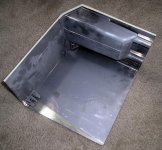
If you're asking if the bucket retaining bolts at the top will be functional, they will be, in two different configurations . . .

. . . as shown, there is a 1/2" deep section of the "bolt tubes" remaining on the "bucket" . . .

. . . that includes the flat "bolt seat" at the bottoms of the tubes, so the standard bolts will hold the cutaway bucket to the front bezel.

For the pop-top of the bucket, I'll probably fab an interim standoff tube and bolt system . . .

. . . so that I can bolt the pop-top onto the cutaway bucket that's bolted up to the front bezel with the standoff tubes.

As for turning the rounded corners, achieving matched thicknesses and the fusion of Clear Plexi and Yellowed ABS . . .

. . . that's a function of roller guided router bits, plexi bending, selective treatments, shiplaps and back magic! [}:)] ]'>

 
Don't care about cutting up the side of a compact like that (because really, they're everywhere) but please tell me you are not done with the ZIP drive. No dust protection isn't going to end well.

 
Nope, clear plexi enclosure monocoque chassis coming right up. :beige:

Built-in sluiceway lid for MacQuarium flooding insurance as well!

Gotta swap in the guts from one of the Parallel Port Zip 250s as also. Got three of the lil' blue turds listed as "SCSI" on eBay recently, so they were basically free.

That'll be for the ATOM board's printer port, no other worldly use for a parallel port otherwise! :lol:

 
Can't wait to see more jt.

Your Radius hack has me wanting to clean up my zip hole in the SE for the new year, BTW.

I was wondering. Is perspex the material that also comes in a variety of colors and thickness?

 
Printers! :lol:

Actually, that was a bit of hyperbole, lots of ancient numeric control stuff runs off the parallel port . . .

. . . like my 40" CAMMJet . . . then again, that Plotter is one big@$$ Printer . . . with knives! [}:)] ]'>

Update: I'll edit in some verbiage tomorrow, it's bedti . . .

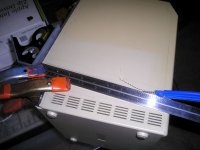
AZPlus.19.2p.jpg

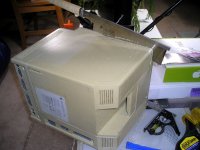
AZPlus.21.2p.jpg

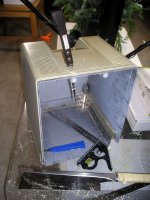
AZPlus.22.2p.jpg

Dozuki Noko Giri: one hot little Mama Saw! She was really sweet until I knocked out a couple of her teeth . . . time for a replacement blade. This one is named Mitzi, after my Aunt Mitsuko.

The nasty little saw separating the two case sections after all the long cuts have been made, is way beyond repair. After I break down and buy a new one, I may clip off the squiggly/gnarly front two thirds of it and use the back third for close quarters work . . . or not, me likes nasty! [:D] ]'>

< YAWNNNNN!!!!!!!!!!!! >

. . . not so bad actually, my Japanese saws are something like 23 years old and they're all on the original blades . . .

. . . but they're are getting a bit long in the tooth . . . those that haven't fallen out . . . [:o)] ]'>

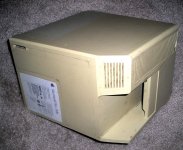
AZPlus.23.2p.jpg

AZPlus.24.2p.jpg

. . . zzzzzzzzzzzzzzzzzzzzzzzzzzzzzz xx(

 
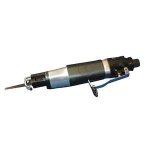
well if i was doing that, i'd probably use this:

Body Saw

ATD2140.jpg

I'd probably do it in the garage too, but that is just me :)

Looks like you have quite a relationship with your Japanese saws,

and after all I thought these guys in the the other forums were being funny.

What is the intended use for those finely crafted tools you have there?

They almost look surgical.

 
I've got that one too, along with all the other pneumatic tools that'll run off a 15A job site compressor, I used the nibbler yesterday to rough in the clearance cuts for the Radius_81/110/Zip . . . the manual sheet metal tools are close at hand in a very full dough pail with my sheet metal tool belt wrapped around it. The body saw cuts on the pull stroke, just like Mitzi but the kerf of your blade of choice is probably 10x what I wanted for mating the pieces after the cutting was done.

. . . after all I thought these guys in the the other forums were being funny.
Nope, nobody jokes about the tools and what they can do, just my love for them. [;)] ]'>

Check out the specs on the thickness of Mitzi's blade and the width of the kerf setting. The plexi scribe makes a wider slot, but the guidance is priceless. there's still a bit of deflection of the blade, I'll take a shot of where Mitzi strayed offline rounding the top right corner and cutting across the bolt tubes. After the edges are filed and sanded straight as an arrow and as smooth as ABS gets, the slot dividing the bucket halves will be no more than 1/64_in./.6mm. or I'll be very disappointed in the results. That's noticeably thinner than the tightest you can close the gap between bezel and bucket on a Compact Mac. They left that gap wide enough to make spotting variances more difficult, no need for that when doing fine joinery by hand.

If anyone else tries this or a similar cut, make sure to install the depopulated front bezel, taking Mr. Ryoba (the larger, double edged saw in the linked tenon cutting video) for a walk through that section of the case would be a good idea as well. His teeth have no set, so the thicker blade still makes for a kerf thinner than the plexi scribed guidelines.

What is the intended use for those finely crafted tools you have there?
Cutting the dovetails for the tool boxes I've yet to start. Also for cutting the simple and complex shaped lids off the rest of the completed one piece carcasses of the boxen. That's exactly the process I've just done to the Plus carcass . . .

Should have installed the other lid on the PlusBox for the cuts . . . they'd have been cleaner . . . :-/

 
Those Japanese Dozuki saws are fabulous tools. I bought one years ago which quickly became my preferred saw, much to my surprise, as I had grown up around and had inherited a set of quality woodworking hand tools.

I have used mine in manifold ways (apart from sawing up Macs, I confess), e.g., on 1/4" veneered plywood when making panel doors for a kitchen refit. They will cut such ply entirely without tearout, something that is virtually impossible using a conventional western handsaw, or varieties of table saw. Reciprocating saws? Forget it.

The reason they work like they do is that the blade is so thin and the teeth so fine and sharp. You would indeed get a fine, accurate, clean cut on plastics using one of these that would be more or less impossible to achieve otherwise.

The downside is that the blade and the teeth are so fine that they tend to suffer from careless use, or even after a couple of years of regular, careful use, and you can't just sharpen them again like a "western" saw because of the way they are made. Maybe the high-end, expensive versions last longer, but I wouldn't know — the cheap ones have their virtues.

Lee Valley sells a folding Dozuki, which opens and folds together so that the blade is no longer a danger, more or less like a pocketknife. Very handy tool and cheap with it.

 
Here are the before cleanup shots of the places where I should have used Mr. Ryoba's more thick, set free toothed blade instead of Mitzi's exceedingly thin blade with slightly set teeth.

AZPlus.25.2p.jpg

It's easy to spot, in hindsight, where the set of the teeth and thinness of the blade led to it straying off line when it met up with variations in the depth of the ABS it was cutting. Set teeth make for wobble room and cut drift in such situations. This can be particularly nasty when a bandsaw blade decides to follow the path of least resistance when ripping wood that has a strong grain pattern and hardness differential between grain layers. By the time you notice the top of the cut wandering offline, you can bet the bottom is way out of whack, feed rates and blade choice are critical for the bandsaw. The manual tool equivalents are the same raw deal. [;)] ]'>

AZPlus.26.2p.jpg

Note the nubbins of the bucket bolt tubes in this shot, they'll do nicely for final assembly.

The scrape marks in the rear view are from being a bit too hurried in using the Dozuki Noko Giri making the plunge cuts. The "first tooth" of these saws work very nicely as plexi scribe type tools when working ABS case parts. Again, the Ryoba should have been used, maybe the 06-240 Cross-cut RazorSaw that was misnamed Dozuki back when Japanese PullSaws were first hitting the mail order tool catalogs. The Dozuki Noko Giri was misnamed Dozuki Noko.

I'm learning about lots of new Japanese saws for the wish list along with more accurate nomenclature . . .

. . . we'll see if I can remember to use the correct names, but the simplified versions are so much shorter and easier!

If anyone wants to give these tools a try, There's a nice little Ryoba, that's equivocally named "Bear Saw" which is the mfr's name, IIRC. I got it at Lowe's for somewhere between 20 & 25 dollars as a knock-around field saw. When broken down to the blade & handle components, it fits in a medium size toolbox very nicely. Mine rests in an elongated, antique (it looks antique from general appearance, build quality and manufacturing methods) metal mechanic's toolbox.

Highly recommended! :D

WARNING: THESE SAWS ARE HIGHLY ADDICTIVE! }:)

 
I've finished with the first pass at filing the joinery on the case sectons and the results are a tad disappointing in fit and finish. No time for pics right now, later on those. Overall I'm still very pleased with the outcome.

Some sleight of hand in the implementation of the clear sections will cover a multitude of sins! ;)

These were planned ahead of time, BTW. }:)

 
Love your hacks man, can't wait to see this thing completed.

Ignore the hatin' by the vocal minority, hacks are where its at.

 
THX for your support, it's nice to receive good feedback every now and then. :beige:

Update:

. . . after pics of first file fitting . . .

AZPlus.27.2p.jpg

. . . I've shimmed the bucket halves to match up the planes/corners of the original config as closely as possible . . .

AZPlus.28.2p.jpg

. . . it's easy to spot where the saw went offline on the sections with thickness transitions . . .

. . . the worst spots are still less than 1.5mm of separation . . . right where the original bucket sections will be mated . . .

. . . slightly disappointing . . . but the cracks won't be noticeable when I'm finished anyway! }:)

 
Lookin' good!

Are you going to use a momentary push switch somewhere for the Atom board power switch, or are you planning on making the original work?

(It would be really cool if you incorporate a spring into the original and make IT a momentary switch.. }:) )

 
THX!

The Programmer's switches on the "MoBo" are already momentary switches. ;)

The Power Switch will activate the MacQuarium lighting, air pump, and A/B backlighting while the Brightness Control will . . .

. . . continue to do its thing. }:)

I don't really need to have three monitors hooked up to the ATOM Board. Maybe I should put a SCSI card in there and use the Zip I already have hacked for it and a SCSI HDD? Dunno, I'd rather have the 250MB Parallel Zip in there.

 
Either way, you're going to have to come up with some magic cabling to connect them (I haven't seen a <1ft 25 pin cable before, IIRC)

So I'm interested in seeing how that's accomplished! :approve:

 
DB-25 IDC Connectors and Ribbon Cable. ;)

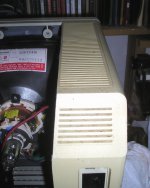
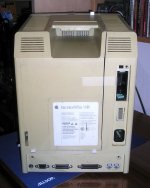
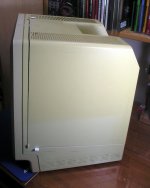
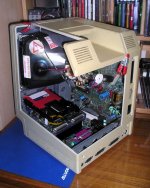
Case cuts are finished . . .

AZPlus.29.2p.jpg

. . . plans:

. . . 1/4" Plexi . . .

. . . Shiplap all 9 sides to depth match surface to the different case thicknesses . . .

. . . Plexi-Bender to form the two curved surfaces on a jig . . .

. . . practice on low profile case or just wing it and cut it down if boo-bood for LowRider SportTop. }:)

 
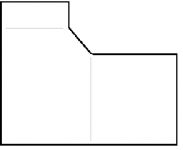
Is your plexi more or less going to look like this at first? (all one piece?)

Untitled.png

just trying to visualize :b&w:

 
Back
Top