
Sweet! Is this considered "ready to go" and should I order some boards from your plans or are you going to do another rev or two before you call it finished?Got the mouser order tonight - BlueSCSI 1.0-a fully assembled - tested termination - works!

-
 Hello Guest! We're hosting a challenge to welcome vintage Intel macs to the MLA during the month of July! See this thread for more information.
 -
We've made some quality of life improvements to the Trading Post. More info here.
You are using an out of date browser. It may not display this or other websites correctly.
You should upgrade or use an alternative browser.
You should upgrade or use an alternative browser.
Arduino SCSI device - Work in Progress
- Thread starter erichelgeson
- Start date
hmm that's likely it then, as 4.6v is on quite the low end of the scale and it probably means that even if the stm chip turns on it would be triggering brown out detection and constantly reseting itselfIt may not even be a matter of current. I noticed while poking around with my SE/30 that there appears to be a Schottky diode drop on the SCSI termination power rail, resulting in a voltage of about 4.6V iirc. This makes sense, as you don't want another device on the SCSI chain also providing term power (like my CD-ROM does) "fighting" with the power supply. This might just be marginal enough even with the low dropout of the regulator on the Blue Pill that the processor isn't getting enough voltage. And I imagine some Blue Pills have better LDOs than others, considering everybody makes them.
does anyone know just how many Macs are effected by this? as if its only a few models it probably doesn't matter but if it is common to many models it would probably be a good idea to add a power connected to the board with a. 3 pin header to allow people to select either termination power or power from an external source through the power connector (hope that makes sense), the small increase if PCB footprint size would barely have any effect on the overall cost of getting boards manufactured so its probably something worth exploring?
also these bluepill boards can be overclocked a bit and I wonder if that would improve the overall speed of scsi transfers?

Please do and let me know - I guess all of my machines provide a good 5v - but if that's not common (and probably with 30 year old machines it varies) it would be a good idea to have a 5v line. An option is they do make molex to usb to provide 5v, but they're a bit hard to source. I'll look at the cost and layout.check how much current the se/30 can provided on the scsi 5v termination line
This is something I'll try this weekend, I've noticed the option, just never selected it.also these bluepill boards can be overclocked a bit and I wonder if that would improve the overall speed of scsi transfers?
The scsi termination works well. Would just adding niceties to it now - eg: 5v Power, activity LED pin out, fix placement of debug pins (not enough room), likely remove fuse, remove 2nd hole as there is not enough room to use it, 3d print a bracket. But all that said it works well and I'm testing/using this rev (and ztto's rev) daily. If you're comfortable figuring out any issues you run into yourself 1.0-a is ok for you. If you want a set it and forget it - let me think on a few of these items - likely a 1.0-b will be happening soon.Is this considered "ready to go"
Since there is quite a bit of demand I'm considering doing an order of 100 (shipping really kills the deal for small batches) I do have 2 1.0-a's and 3 ztto v2's if anyone wants a blank now - with the expectation of feedback.
Please do and let me know - I guess all of my machines provide a good 5v - but if that's not common (and probably with 30 year old machines it varies) it would be a good idea to have a 5v line
FWIW, on a couple of IIsi boards I have here, putting any actual load on the power seems to drop the voltage to about 2.5v. I really think a 5v in is a good idea if there's room for it.
Re power, might it be best to add a floppy power connector to the PCB design, but leave it unpopulated? That would take little space on the board and wouldn’t change the BOM, but if anyone had issues using term power it would be trivial to solder in the connector.
also, I’m definitely in for a few PCBs.
also, I’m definitely in for a few PCBs.
Last edited by a moderator:
well with a passive terminator the the stm bluepill l uses 140ma of current on a 5v volt rail. but I don't seem to need to use scsi termination when its connected to my se/30. i wouldn't be surprised if the bluepill has built in internal pull-ups on the lines used for the scsi interface so perhaps its not needed, or maybe just not needed on the se/30?
also I decided to overclock the bluepill and was able to get a subtle improvement in transfer speeds as shown below. its about 100KB faster on read and about 40kB faster on write speeds. everything is the same but with the overclock option enabled before flashing so its going from a stock clock speed of 72mhz to 128mhz
[edit] forgot to mention to that when I don't power the bluepill external and try to use the 5v termination power from the se/30 that 5v coming into the bluepill shows 1.3v
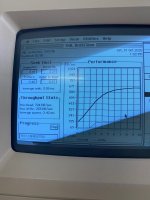
also I decided to overclock the bluepill and was able to get a subtle improvement in transfer speeds as shown below. its about 100KB faster on read and about 40kB faster on write speeds. everything is the same but with the overclock option enabled before flashing so its going from a stock clock speed of 72mhz to 128mhz
[edit] forgot to mention to that when I don't power the bluepill external and try to use the 5v termination power from the se/30 that 5v coming into the bluepill shows 1.3v
Last edited by a moderator:
Remember I built one of these myself without any circuit board and before I found this thread, I'm quite comfortable figuring out any issues that come up.The scsi termination works well. Would just adding niceties to it now - eg: 5v Power, activity LED pin out, fix placement of debug pins (not enough room), likely remove fuse, remove 2nd hole as there is not enough room to use it, 3d print a bracket. But all that said it works well and I'm testing/using this rev (and ztto's rev) daily. If you're comfortable figuring out any issues you run into yourself 1.0-a is ok for you. If you want a set it and forget it - let me think on a few of these items - likely a 1.0-b will be happening soon.
Since there is quite a bit of demand I'm considering doing an order of 100 (shipping really kills the deal for small batches) I do have 2 1.0-a's and 3 ztto v2's if anyone wants a blank now - with the expectation of feedback.
 Put me down for at least three boards, please.

i wouldn't be surprised if the bluepill has built in internal pull-ups on the lines used for the scsi interface so perhaps its not needed, or maybe just not needed on the se/30?
Hacks territory there, the internal pull-ups are not low resistance like the SCSI bus terminators so technically the bus isn't "in spec" if you go that route, but I'd vouch I personally prefer that hack if it works because it also negates the need for transceivers with high-current sinking capability. And, therefore, you cut most of the cost of RaSCSI.
And actually, that's a good point to mention, looks like this is using "direct connection" to the SCSI bus and I wouldn't think the STM32 is rated for 48mA on each I/O pin. And it isn't, I checked the datasheet and it says 25mA as the "absolute maximum."
Note that 48mA is the maximum rating in the SCSI spec assuming a bus has two passive terminators on each end, which supply 23mA each. Of course our typical Macintosh SCSI buses fare well with only a single passive terminator.
that's really interesting, yeah I haven't looked at any specs on current sinking required on the scsi bus for termination. though if the stm32 is rated at a max of 25ma then I would imagine that some 245's or something on the IO lines is probably needed for long term reliably. again though I haven't really looked into it. like even the overclocking of the stm32 chip while listed as an option in the Arduino IDE may or may not be a good thing. Im not really sure what the max operating specs are of these devices tbhHacks territory there, the internal pull-ups are not low resistance like the SCSI bus terminators so technically the bus isn't "in spec" if you go that route, but I'd vouch I personally prefer that hack if it works because it also negates the need for transceivers with high-current sinking capability. And, therefore, you cut most of the cost of RaSCSI.
And actually, that's a good point to mention, looks like this is using "direct connection" to the SCSI bus and I wouldn't think the STM32 is rated for 48mA on each I/O pin. And it isn't, I checked the datasheet and it says 25mA as the "absolute maximum."
Note that 48mA is the maximum rating in the SCSI spec assuming a bus has two passive terminators on each end, which supply 23mA each. Of course our typical Macintosh SCSI buses fare well with only a single passive terminator.

I have been testing a MacSD card and found it wouldn't turn on connected to an SE/30 due to a blown 1A fuse (F3). Replacing the fuse fixed the issue. I wonder if the term powered devices strain that fuse since they are aged and this is another component that may need replacement like capacitors.there must be something wrong with my se/30 then as i couldn't get it to run using the +5v from the scsi bus
My test machine is an LC and it works great. Likely kit (with pre flashed arduino) and fully assembled.Very interesting project. It will work with LC? Will You sell product or materials for diy project ?
I don't think that's my issue, I recently did a 100% full restore of my se/30 replacing all the caps on the psu/analogue board/logic board, as well ass replacing the SCC chip and repairing a couple wires. I also replaced the Simm ROM socket so I've been over my Mac extremely thoroughly and if it was as blown fuse then I wouldn't get 5v on the termination pin (25 of IDC header I think from memory, I may be wrong on that atm though) when nothing is plugged in. and I also wouldn't the the 1.3v or so when the device is plugged in. im not sure what the current limit is on thermination power but yes is the macSD uses more then it can provide it would blow the fuse or at the very least drag down the voltage like mine is doingI have been testing a MacSD card and found it wouldn't turn on connected to an SE/30 due to a blown 1A fuse (F3). Replacing the fuse fixed the issue. I wonder if the term powered devices strain that fuse since they are aged and this is another component that may need replacement like capacitors.

how much it will cost? Is it possible shipping to Poland? I am interested kit and fully assembled prize.My test machine is an LC and it works great. Likely kit (with pre flashed arduino) and fully assembled.
Last edited by a moderator:
Working on that now - international shipping will be more of course - I just haven't shipped a lot internationally. Cost will be determined on how I can source all the parts - have a spread sheet and working on it now.how much it will cost? Is it possible shipping to Poland?
This weekend I added a floppy power port (though seems to be some conflicting info on if the pitch is 2.54 or 2.5 - though both would probably work), added activity LED pin out, moved the debug port, re-worked the mounting, made the board 1mm wider to not cut off silk screen. Will be testing a few of the power options before actually placing the orders here on non-TERMPOWR macs (like the plus.)
just wondering if you'd had a chance to check out the overclock option and if so what results you go and if you had any issues with reliability etc, mainly just curious tbh, had no issues myself during my short testing but who knows long term sort of thing..Working on that now - international shipping will be more of course - I just haven't shipped a lot internationally. Cost will be determined on how I can source all the parts - have a spread sheet and working on it now.
This weekend I added a floppy power port (though seems to be some conflicting info on if the pitch is 2.54 or 2.5 - though both would probably work), added activity LED pin out, moved the debug port, re-worked the mounting, made the board 1mm wider to not cut off silk screen. Will be testing a few of the power options before actually placing the orders here on non-TERMPOWR macs (like the plus.)
also have you had a chance to test throughput of read and write using different sdcards yet? would be good to get some further results regarding transfer speeds beside what I posted the other day
Been AFK with work, home, etc, but plan to get a few of these todo's done this week and likely do one last prototype batch. I have sent out a few prototypes to people to get some feedback.
I have LED, Berg power, and a few other minor updates done. Though have two questions before I put in the last prototype order:
The floppy berg connector - I've seen conflicting #'s on the pitch - 2.5 and 2.54 - someone on discord measured his and it was 2.54 so I'm going with that.
I'm having trouble finding the right diodes on Mouser - the ones I've found for through hole are all huge(physically) and rated very high (hence the size) - If someone could help find an appropriate diode I'd appreciate it! It seems when searching for components you can get the wrong filter and never find them, then someone else looks and finds one you never saw
The floppy berg connector - I've seen conflicting #'s on the pitch - 2.5 and 2.54 - someone on discord measured his and it was 2.54 so I'm going with that.
I'm having trouble finding the right diodes on Mouser - the ones I've found for through hole are all huge(physically) and rated very high (hence the size) - If someone could help find an appropriate diode I'd appreciate it! It seems when searching for components you can get the wrong filter and never find them, then someone else looks and finds one you never saw
Similar threads

- Replies
- 14
- Views
- 3K


- Replies
- 31
- Views
- 11K
- Replies
- 1
- Views
- 2K
- Replies
- 7
- Views
- 5K

- Replies
- 87
- Views
- 12K
