Hi everybody! Today I am going to tell you a most extraordinarily entertaining tale of a floppy drive, a boot disk, and a screw driver.
So...
So...
So... what's your experiance with floppy drive alignment. (BTW, I do know that there are tools to do this with, but I don't have them.)The tale of the Floppy Drive Head Alignmentby onlyonemac
A few days ago I was going to post as to why my repaired floppy drive kept ejecting my boot disk. Then, the day afterwards, I found out why...
I cautiously removed the top cover from my floppy drive. There was nothing to lose, really, as it was already broken. Looking more closely at the head inside, I saw that it was noticeably visibly skew. I didn't know, and still don't know, how it got to be like that, because before the repair it was fine, but in any case it was skew.
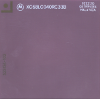
Even more cautiously now, I carefully loosened the two screws holding the head in place. I moved it with my finger to what looked like a better location. Trying the boot procedure again, I now got, instead of a happy mac followed by the disk being ejected, a happy mac followed by a sad mac (code 0F0063 in compact notation). So changing the head alignment had some effect on the mac's ability to read the disk! So I thought... If I could get the head in the right place, it might work again.
So now began the really tricky work. Earlier that morning I had calculated that each track on an 80 track floppy disk was just over a quater of a millimeter wide. I didn't think I would get the drive working properly. But, anyway, I proceeded to adjust the head again, testing it as I went. Eventually I settled on a position which got me to a "Welcome to Macintosh" box. Loosening the screw once again, I moved it over by as small a distance as I could. This got my first three extensions to load, but the fourth gave an error message. Now I had a desktop!
Proceeding in this way, by moving the head in minute increments and then testing the drive, I eventually got all four extensions to load, and for the fourth one to copy the floppy to my RAM disk successfuly. I tightened the screws and carefully replaced the cover.
Overall it was an interesting (and difficult) excercise. Firstly, the closer I was to the correct position, the quicker it got through each stage, as well as getting to a further stage before crashing. So could that explain why some drives take longer than others to start a mac from the same disk? It's most unusual; surely either it works or it doesn't? Secondly, on one of the tests, the mac loaded the first three extensions, but skipped over the fourth. Then, another time, it skipped the first one, loaded the second, and skipped over the remaining four! Does it not keep an index of extensions so that it know how many there are? If it tried to load the others, but failed, then surely I would have got a crash, not a desktop? Finally, I had always pictured the head moving as the machine started (it always moves in the same pattern, of course, and I had become quite familliar with the sound of each stage of the startup process), but it was really interesting actually watching it. Finally I could tell what it actually looked like. It's kind of what I'd expected.
The end.