
You are using an out of date browser. It may not display this or other websites correctly.
You should upgrade or use an alternative browser.
You should upgrade or use an alternative browser.
3 More Additions
- Thread starter iMac600
- Start date


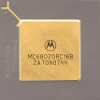
Ok guys, this is strange. It DOES have an S-Video Out port, but it DOESN'T have an L2 cache.
From what I can tell. There's a slim chance the cache isn't being detected because the OS was installed via XPostFacto.
Looking into it now.
EDIT: Definitely has no L2 cache. 67mhz bus clock.
From what I can tell. There's a slim chance the cache isn't being detected because the OS was installed via XPostFacto.
Looking into it now.
EDIT: Definitely has no L2 cache. 67mhz bus clock.


everymac.com has all the answers!
Anyways, to clarify:
The original (WallStreet) came with several configurations, for screen and processor.
The 13 and 14" display models always had 4MB of VRAM and SVideo-out, regardless of whether they had the cheapest, cacheless 233MHz processor or the top-end 292MHz version.
The 12" STN was only available with 2MB of VRAM and no SVideo-out as further cost savings.
Also, all of these displays were incapable of resolution scaling (they were always fixed at 1024x768).
The second version (WallStreet II/PDQ) also had three display choices, but only three processor options.
The three displays were still 12, 13, and 14, but now the 12" was TFT and all models had 4MB VRAM and SVideo. The displays could also change resolution between 1024x768, 800x600, and 640x480.
The three processors were 233MHz, 266MHz, and 300MHz. All of them had L2 caches.
Hope I didn't induce any confusion...
BTW, the system bus frequency is determined by the MPC106 contained on the processor card, not anything on the system board. The PCI bus is always at 33.3MHz regardless of system bus speed. Thus, on the original versions anyway, a 292MHz/83MHz processor card can replace a 233/66MHz card with no issues. I've done it myself.
I have a 250/83 that I can swap into a second-version 233/66 to see if it can be done.
Anyways, to clarify:
The original (WallStreet) came with several configurations, for screen and processor.
The 13 and 14" display models always had 4MB of VRAM and SVideo-out, regardless of whether they had the cheapest, cacheless 233MHz processor or the top-end 292MHz version.
The 12" STN was only available with 2MB of VRAM and no SVideo-out as further cost savings.
Also, all of these displays were incapable of resolution scaling (they were always fixed at 1024x768).
The second version (WallStreet II/PDQ) also had three display choices, but only three processor options.
The three displays were still 12, 13, and 14, but now the 12" was TFT and all models had 4MB VRAM and SVideo. The displays could also change resolution between 1024x768, 800x600, and 640x480.
The three processors were 233MHz, 266MHz, and 300MHz. All of them had L2 caches.
Hope I didn't induce any confusion...
BTW, the system bus frequency is determined by the MPC106 contained on the processor card, not anything on the system board. The PCI bus is always at 33.3MHz regardless of system bus speed. Thus, on the original versions anyway, a 292MHz/83MHz processor card can replace a 233/66MHz card with no issues. I've done it myself.
I have a 250/83 that I can swap into a second-version 233/66 to see if it can be done.


Can't help you with the PAF, but the US Post Office has an $11 flat rate envelope, four pounds weight limit, 12.5x9.5", worldwide.PAF AND Shipping.
Well, that's good thenI opened the G3 and it has no damage at all ... Fit it in right and it booted right up no problems.

And you can always upgrade the CPU module later onSadly it's only a 233mhz, which means it has no L2 cache
Well, this is possibly it's first venture on to the 68kMLA from Safari 1.3. Even with 128mb RAM and the 2GB hard disk it's still very snappy and responsive, although I think with some extra hardware it should run even better.
I may open up the ThinkPad later and see if I can get that running as well.
I may open up the ThinkPad later and see if I can get that running as well.

Heh, sadly I think the motherboard in the ThinkPad is roasted. I'd swap the working parts into my other ThinkPad, but for example, the converter board on the back of the DVD drive is a full centimetre off alignment despite being pin compatible, etc.
I need to upgrade Safari, but at the moment it's not worth putting in too much effort. It does have Panther installed on a 2GB drive after all, with only 650mb free space remaining. Definitely needs a hard disk upgrade, but I need to source one first, along with some RAM, preferably locally (within Aus).
I need to upgrade Safari, but at the moment it's not worth putting in too much effort. It does have Panther installed on a 2GB drive after all, with only 650mb free space remaining. Definitely needs a hard disk upgrade, but I need to source one first, along with some RAM, preferably locally (within Aus).
Before you upgrade your hard disk, some food for thought:
When Apple designed the WallStreet, they used a magnetically-actuated sleep system. While nothing is wrong with this per se, there IS often a problem with the switch's location: directly over the hard disk in the upper area of the case.
Older, slower hard disks, such as those made pre-2000, had armature magnets that were relatively weak and therefore had no effect on the sleep switch. Newer drives (particularly faster models), however, utilized magnets with fields strong enough that they clearly manifested well beyond the confines of the disk's casing (hold a ferrous screw up to one and you'll see). This would interact with the little reed switch used to trigger sleep, and, when one of these strong-magnet drives are installed, the machine would be forced immediately into a permanent, irrecoverable sleep mode directly after booting. Not every modern drive will do this, but many of them will. For example, I had a 20GB IBM/Hitachi and a 16GB Toshiba do this to me. The machine only returned to working status when the new hard drive was removed.
The only recourse: Stick with an old hard drive, and you'll be safe.
Actually, you can also choose a hard disk with a particular HDA/PCB arrangement. These drives locate the armature magnets directly next to the drive's interface connector, which keeps the offending magnetic field well away from the sleep switch.
It's kind of hard to describe without another paragraph or two, so here are some pictures:
Good:
http://www.hardwarezone.com/img/data/articles/2003/879/drive-underside.jpg
Bad:
http://www.hardwarezone.com/img/data/articles/2003/693/drive-back.jpg
I personally recommend Fujitsu (which, incidentally, the "Good" drive is). I wholeheartedly recommend Fujitsu regardless, but in these WallStreets is another application where they work better than many other drives. They're the only brand I use in these machines (if I replace the original drive, that is).
When Apple designed the WallStreet, they used a magnetically-actuated sleep system. While nothing is wrong with this per se, there IS often a problem with the switch's location: directly over the hard disk in the upper area of the case.
Older, slower hard disks, such as those made pre-2000, had armature magnets that were relatively weak and therefore had no effect on the sleep switch. Newer drives (particularly faster models), however, utilized magnets with fields strong enough that they clearly manifested well beyond the confines of the disk's casing (hold a ferrous screw up to one and you'll see). This would interact with the little reed switch used to trigger sleep, and, when one of these strong-magnet drives are installed, the machine would be forced immediately into a permanent, irrecoverable sleep mode directly after booting. Not every modern drive will do this, but many of them will. For example, I had a 20GB IBM/Hitachi and a 16GB Toshiba do this to me. The machine only returned to working status when the new hard drive was removed.
The only recourse: Stick with an old hard drive, and you'll be safe.
Actually, you can also choose a hard disk with a particular HDA/PCB arrangement. These drives locate the armature magnets directly next to the drive's interface connector, which keeps the offending magnetic field well away from the sleep switch.
It's kind of hard to describe without another paragraph or two, so here are some pictures:
Good:
http://www.hardwarezone.com/img/data/articles/2003/879/drive-underside.jpg
Bad:
http://www.hardwarezone.com/img/data/articles/2003/693/drive-back.jpg
I personally recommend Fujitsu (which, incidentally, the "Good" drive is). I wholeheartedly recommend Fujitsu regardless, but in these WallStreets is another application where they work better than many other drives. They're the only brand I use in these machines (if I replace the original drive, that is).
I'll have a look into this, but that really is a major inconvenience. Realistically i'll try and find the right drive, but i'll have to go for any drive I can get. I can't exactly find them just lying around here so good or bad, it'll probably be the last chance I get for a while.
I'll just have to risk it.
Otherwise i'm looking for something about 10gb, 20gb tops. I don't need major amounts of storage, just something to give me a few gigs to play with outside of booting the operating system.
EDIT: Just found out you can sometimes buy shielding foil, often used to overcome this issue. May look into this.
I'll just have to risk it.
Otherwise i'm looking for something about 10gb, 20gb tops. I don't need major amounts of storage, just something to give me a few gigs to play with outside of booting the operating system.
EDIT: Just found out you can sometimes buy shielding foil, often used to overcome this issue. May look into this.

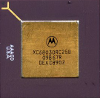
The FSB is determined by the CPU card. In this case I would rather have a 292 CPU from an early WS rather than the 300 from the later one. I wonder if they are interchangeable between the early and late models??Just an update, I swapped in the 292mhz CPU card and it booted successfully. 1MB L2 cache is detected and used by the system, and it's running on an 83mhz frontside bus.
Previously it said the FSB was 66... strange.
Similar threads

- Replies
- 12
- Views
- 375


- Replies
- 6
- Views
- 344


