

Hi folks,
Now at last I understand, it's only taken me 38 years.
I started studying Computer Science at the University of East Anglia in September 1986. In basically the first introductory lecture I went to, the professor there covered the facilities the Computer Science department made available to SYS 1: First Year Information Systems students. Firstly, there was the VAX 11/780.
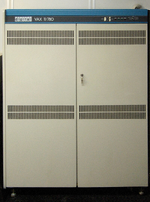
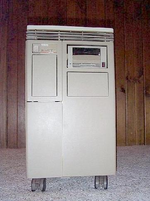
That was the most powerful computer we could use, a 32-bit beast, but mostly we wouldn't get access to it, except when we were trying to do project work in the Computing Building, which was also available to basically anyone in the Uni with an account. Then there was the MicroVax I - an anemic sibling with 30% of the 1MIP, 11/780's performance in the SYS building. But they'd expanded it to 16MB of RAM, even though that apparently wasn't possible, so we could do even more slow computing. Hurrah.
And then - to the accompaniment of angelic choirs in my mind - they told us about the MacLab: 10 to 15 Macintosh computers in a single Lab. And these weren't just any Macs, they had been upgraded from a perfectly adequate 128kB to a stonking 512kB over summer. Our year was the first to use them.
I couldn't wait. I had never seen any of these fabled creatures in real-life, still less a FAT Mac! We were advised to buy a 3.5" Sony disk for just £10 (equivalent to £29.78 today) so we could approach the Temple of Macintosh and begin the discipleship. So I did.
Pretty sure we ran System 2 on it. 512kB was incredible, you just couldn't fill it with any kind of MacWrite, MacPaint or MacPascal document you could conceive of. But of course, these apps were massive in themselves, some over 65K! How could anyone seriously write an app that big? It would have taken months of solid slog! Even though they only had one drive, and often involved lots of disk swapping and frequent system crashes, they were mind-blowing
But skipping ahead 35 years I found myself confused. This is why: Fat Macs had 400kB disks, but I'm sure our Fat Macs had 800kB disks. But my mind could have been playing tricks with me. So, today, when I was visiting my dad in Nottingham, I popped into a wardrobe we never use and strangely found myself in a remarkable wintery landscape... no, no. I found a whole bunch of non-HD, 3.5" disks some of which went back to 1986, marked with titles such as: "ESE182" (Electronic Systems Engineering, 1st Year, course code 82).
And, it turns out all of these Mac disks are 800kB. And I never remember, later not being able to take any one of the disks from our even newer Mac Plusses in the Digi-lab and put them in the Fat Macs, since that would be a pretty bad show stopper! But how did they have working 800kB disks? The Fat Macs didn't! And they couldn't have been Mac 512Ke's, because they were Mac Plusses with just 512kB of RAM and I knew for sure they didn't have SCSI round the back.
Or did they? This evening I finally looked up the Mac 512Ke spec on EveryMac. And yes, it was really a Mac 512kB with 128kB ROMs, an 800kB drive and no SCSI. They'd never been Fat Macs, they'd been Mac 512Ke(ED) upgraded Macs all the time.
So, the mystery is solved and I have a stack of 33 DSDD disks, including a stack of 14 MacWrite II (British) installation disks I'm not sure what to do with.
Now at last I understand, it's only taken me 38 years.
I started studying Computer Science at the University of East Anglia in September 1986. In basically the first introductory lecture I went to, the professor there covered the facilities the Computer Science department made available to SYS 1: First Year Information Systems students. Firstly, there was the VAX 11/780.
That was the most powerful computer we could use, a 32-bit beast, but mostly we wouldn't get access to it, except when we were trying to do project work in the Computing Building, which was also available to basically anyone in the Uni with an account. Then there was the MicroVax I - an anemic sibling with 30% of the 1MIP, 11/780's performance in the SYS building. But they'd expanded it to 16MB of RAM, even though that apparently wasn't possible, so we could do even more slow computing. Hurrah.
And then - to the accompaniment of angelic choirs in my mind - they told us about the MacLab: 10 to 15 Macintosh computers in a single Lab. And these weren't just any Macs, they had been upgraded from a perfectly adequate 128kB to a stonking 512kB over summer. Our year was the first to use them.
I couldn't wait. I had never seen any of these fabled creatures in real-life, still less a FAT Mac! We were advised to buy a 3.5" Sony disk for just £10 (equivalent to £29.78 today) so we could approach the Temple of Macintosh and begin the discipleship. So I did.
Pretty sure we ran System 2 on it. 512kB was incredible, you just couldn't fill it with any kind of MacWrite, MacPaint or MacPascal document you could conceive of. But of course, these apps were massive in themselves, some over 65K! How could anyone seriously write an app that big? It would have taken months of solid slog! Even though they only had one drive, and often involved lots of disk swapping and frequent system crashes, they were mind-blowing
But skipping ahead 35 years I found myself confused. This is why: Fat Macs had 400kB disks, but I'm sure our Fat Macs had 800kB disks. But my mind could have been playing tricks with me. So, today, when I was visiting my dad in Nottingham, I popped into a wardrobe we never use and strangely found myself in a remarkable wintery landscape... no, no. I found a whole bunch of non-HD, 3.5" disks some of which went back to 1986, marked with titles such as: "ESE182" (Electronic Systems Engineering, 1st Year, course code 82).
And, it turns out all of these Mac disks are 800kB. And I never remember, later not being able to take any one of the disks from our even newer Mac Plusses in the Digi-lab and put them in the Fat Macs, since that would be a pretty bad show stopper! But how did they have working 800kB disks? The Fat Macs didn't! And they couldn't have been Mac 512Ke's, because they were Mac Plusses with just 512kB of RAM and I knew for sure they didn't have SCSI round the back.
Or did they? This evening I finally looked up the Mac 512Ke spec on EveryMac. And yes, it was really a Mac 512kB with 128kB ROMs, an 800kB drive and no SCSI. They'd never been Fat Macs, they'd been Mac 512Ke(ED) upgraded Macs all the time.
So, the mystery is solved and I have a stack of 33 DSDD disks, including a stack of 14 MacWrite II (British) installation disks I'm not sure what to do with.




