• Hello MLAers! We've re-enabled auto-approval for accounts. If you are still waiting on account approval, please check this thread for more information.

The "most powerful" 68000-only Mac?

One thing I was thinking about lately, who has the most powerful/fastest/most capable 68000 Mac out there?

I’m only counting the original 68000 processor here, once you get into the 68020/68030/68040 you have a lot more performance related aspects to consider (MMU, bursting, larger address space, cache, etc.) That does exclude most computers and accelerators but the difference is pretty significant.

For example, here is one of my Macintosh Portables:
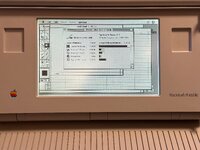
IMG_8247.jpeg

It has 15MB of RAM which is well above most of the other 68000 Macs with 4MB, and both RAM and ROM are running at zero wait states so access times are as fast as can be.

The Portable starts out with the advantage by using a 16MHz 68000 rather than 8MHz like the other 68000 Macs have, though I know there were many 16MHz 68000 accelerators around for other systems. I do wonder about pushing the clock speed higher than Motorola's rating, but that would probably require some timing patches as well.
Several of the 68000 based accelerators did add an FPU. I haven’t looked in to how much ROM patching this would require yet.

So I'm mostly just curious, has anyone built anything bigger?
 
The Portable tops out at 9MB (not sure about the PB100) but I moved the ROM higher into the memory space to make space for 15MB of RAM.
Oh, right; forgot about that :) The same trick should be possible for the PB100, since they're logically the same machine, just a re-do of the boards and parts to shrink things a bit for a smaller form factor with a new battery chemistry.
 
has to be the Portable, if we're talking about non-upgraded 68000 machines, doesn't it? Were there even 68000 accelerators sold for the Mac? quite a few 68020 and 68030 kits. Next after Portable, maybe an Amiga or Atari with a 68010 and Mac software emulator. Probably the Atari as it runs at 8 MHz, and 68010 gives it maybe 5% more.
 
Can a Portable Macintosh be used in 32 bit mode or just 24 bit mode like the rest? It's amazing how much RAM you have in that one. A bootable SSW 6.0.8 RAM disk must be really fast and convenient. Can the SCSI drive be interleved?
When you say "most powerful", IMO the "most compatible for its time" is really what matters. Compatibility was a big issue then.
 
is there a definitive write up of radius? That HAD to be a fantastically interesting place the first few years.

I don’t suppose anyone has hacked up a recreation of that 16 MHZ card? I love my plus but sometimes it’s nice to use an Se/30 or amiga 3000 with A-Max because the xtra speed does make a difference.

That portable looks like a great machine.
 
Can a Portable Macintosh be used in 32 bit mode or just 24 bit mode like the rest?
Unfortunately the 68000 only had 24-bits of address lines connected. To address additional memory you would need to implement some sort of bank switching/MMU. It wasn't until the 68012 which had 31-bits connected, or the 68020 which had 32-bits.
 
The Portable tops out at 9MB (not sure about the PB100) but I moved the ROM higher into the memory space to make space for 15MB of RAM.
Wow, that statement, 'I moved the ROM higher into the memory space to make space for 15MB of RAM,' sounds like it was quite a challenge. Could you share some takeaways from such hard work? I bet it wasn't a walk in the park to accomplish that.
 
Wow, that statement, 'I moved the ROM higher into the memory space to make space for 15MB of RAM,' sounds like it was quite a challenge. Could you share some takeaways from such hard work? I bet it wasn't a walk in the park to accomplish that.
It doesn't take much, the basic process is disabling the built-in ROM with the switch/jumper on the board, putting the ROM on a PDS card, and making a few patches in ROM to make sure it finds it at that higher address. The PDS card has a CPLD to decode the right addresses, but you could do it with basic logic as well.
 
It doesn't take much, the basic process is disabling the built-in ROM with the switch/jumper on the board, putting the ROM on a PDS card, and making a few patches in ROM to make sure it finds it at that higher address. The PDS card has a CPLD to decode the right addresses, but you could do it with basic logic as well.
Setting aside the problem of adding more RAM physically, do you see it feasible to do something similar with the ROM of a Macintosh Plus? The ROM-INATOR provides the means to implement patches easily, and a mod version could include the PLD to provide the new ROM address.
 
Last edited:
Setting aside the problem of adding more RAM physically, do you see it feasible to do the same with the ROM of a Macintosh Plus?
Without separating the CPU from the computer in order to rewrite addresses, you would have to move other devices on the bus to different parts of memory. You could get up to 5.5MB just by moving the ROM, but now the SCSI address space in the way. If you moved SCSI, you would get up to 8MB where you hit the SCC. You would also have to ensure the video circuity still knows where to go for video data in RAM.
It might be easier just to put a 68000 on an external card of some sort so you can isolate it from the bus, then you can intercept address accesses and put them wherever you want.
 
Without separating the CPU from the computer in order to rewrite addresses, you would have to move other devices on the bus to different parts of memory. You could get up to 5.5MB just by moving the ROM, but now the SCSI address space in the way. If you moved SCSI, you would get up to 8MB where you hit the SCC. You would also have to ensure the video circuity still knows where to go for video data in RAM.
That's the hard part for me. I'm nowhere near a true 68K assembler expert like you.
It might be easier just to put a 68000 on an external card of some sort so you can isolate it from the bus, then you can intercept address accesses and put them wherever you want.
I could imagine this being relatively easy to accomplish in several ways and at different levels.

A carrier board could plug into the CPU footprint with a socket to relocate the CPU on top, much like the ROM-inator board does with ROM chips. The entire 8MB of RAM could be added with a Mac Plus version of Golden Potato's RAM expansion board (no more dealing with broken SIMM sockets).

The question is: would the development of such a carrier board for the Mac Plus be interesting enough to the community? This would involve a socket to relocate the CPU, along with a couple of PLDs and an 8MB RAM expansion board.

A Mac Plus logic board replica design, like the one @max1zzz is developing, would serve as a foundation to add 8 MB of onboard RAM and allow the freedom to intercept and rewire the address bus accordingly.

Something similar could be done for the SE and the Classic, using the PDS slot, but I guess the ROM patching would need to be specific to these models.

How appealing would a Mac Plus/SE/Classic with at least 8MB of RAM be?

To add another perspective: What about having Bolle's Performer Accelerator board redesigned to have a socketed 68000 CPU and 8MB of RAM?
 
When I was looking at the Macintosh Portable specs on EveryMac it states “This model has a 32-bit processor but a 16-bit data path”. So I just thought maybe it can do 32 bit mode. Also just out of curiosity, with over 5 MB of RAM, could a Portable use OpenTransport?
 
That's the hard part for me. I'm nowhere near a true 68K assembler expert like you.

I could imagine this being relatively easy to accomplish in several ways and at different levels.

A carrier board could plug into the CPU footprint with a socket to relocate the CPU on top, much like the ROM-inator board does with ROM chips. The entire 8MB of RAM could be added with a Mac Plus version of Golden Potato's RAM expansion board (no more dealing with broken SIMM sockets).

The question is: would the development of such a carrier board for the Mac Plus be interesting enough to the community? This would involve a socket to relocate the CPU, along with a couple of PLDs and an 8MB RAM expansion board.

A Mac Plus logic board replica design, like the one @max1zzz is developing, would serve as a foundation to add 8 MB of onboard RAM and allow the freedom to intercept and rewire the address bus accordingly.

Something similar could be done for the SE and the Classic, using the PDS slot, but I guess the ROM patching would need to be specific to these models.

How appealing would a Mac Plus/SE/Classic with at least 8MB of RAM be?

To add another perspective: What about having Bolle's Performer Accelerator board redesigned to have a socketed 68000 CPU and 8MB of RAM?
For me, I am pretty interested in something that delivered more RAM and ideally more speed to the Mac Plus.
 
Without separating the CPU from the computer in order to rewrite addresses, you would have to move other devices on the bus to different parts of memory. You could get up to 5.5MB just by moving the ROM, but now the SCSI address space in the way. If you moved SCSI, you would get up to 8MB where you hit the SCC. You would also have to ensure the video circuity still knows where to go for video data in RAM.
It might be easier just to put a 68000 on an external card of some sort so you can isolate it from the bus, then you can intercept address accesses and put them wherever you want.
Supposing I choose to isolate the CPU to rewrite the address accesses on the fly, the ranges I would need to detect are (according to Google Gemini):

Range 1: $40 0000 to $ 41 FFFF / Macintosh Plus ROM

Range 2: $ 58 0000 to $ 59 FFFF / Macintosh Plus SCSI

And the equations used to trigger anything within those ranges would be:

Trigger for Range 1 (R1): R1=/A23⋅A22⋅/A21⋅/A20⋅/A19⋅/A18

Trigger for Range 2 (R2): R2=/A23⋅A22⋅/A21⋅A20⋅A19⋅/A18

Now comes the part of choosing the new address ranges to relocate them!

Any suggestion :rolleyes:?

To differentiate RAM access from ROM/SCSI accesses in those ranges seems easy to solve (using FC2, FC1, FC0, perhaps?).

Also, I guess something has to be done differently when OVERLAY is asserted.

Also, the changes to the RAM expansion board to have 8MB are minimal. The whole thing feels feasible, once you have the CPU on a daughterboard!
 
Last edited:
Back
Top