• Hello MLAers! We've re-enabled auto-approval for accounts. If you are still waiting on account approval, please check this thread for more information.

Apple IIe Card: An Apple IIe INSIDE my Macintosh LC475!

Apple IIe Card: An Apple IIe INSIDE my Macintosh LC475!
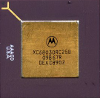
In this video I put an Apple IIe Card in my Macintosh LC475, a machine designed to host this wonderful card. In 1991 Apple wanted everyone to use Macintoshes, and this card would allow schools to buy new LCs with Apple IIe's within. The Apple IIe Card is something of a holy grail device for some Apple II/Macintosh fans. Does it work as a solution? Lets find out!
 
I’ve wondered about the IIe card output myself, as a big Apple I/II/III fan. I can tell you the output of classic Apple II graphics on the GS is a poor facsimile. So much that I won’t use pre-GS software on the GS. The NTSC artifacting is a big part of the look of those graphics, and that is lost on a GS with the RGB monitor.
 
Works, for sure, but you are losing the Apple II spirit and look.

Have one in a machine, but if i want to go for an Apple II experience, will have my IIe instead.

Pretty neat device to be honest, you have got the best of both worlds in a single package, but this little card is pretty hard to find and expensive, you can have several Apple IIs for the same price.
 
Works, for sure, but you are losing the Apple II spirit and look.

Have one in a machine, but if i want to go for an Apple II experience, will have my IIe instead.

Pretty neat device to be honest, you have got the best of both worlds in a single package, but this little card is pretty hard to find and expensive, you can have several Apple IIs for the same price.
Exactly :) Just feels different, when using real Apple or this card. I have also mixed feelings when using IIgs, the ADB keyboard and Apple System 6 for GS ...
 
This is, I'm afraid, another example of the reason I don't watch vintage computer youtube any more. Where's the analysis? How does the software work? Why doesn't the card have a declrom and a driver in ROM? Was this due to hurry in development, or is there a technical reason? Why was Apple's coprocessor game so poor compared to, say, Acorn's? Were there cultural pressures in play in Cambridge that were not in play at Apple? Does this even fit into the general failure of Apple's coprocessor projects? Can it be used to do other workloads other than pretend to be an Apple II?

So you make a video that tells nobody anything new and then spam it in multiple places in a forum you've never been on before. You will forgive me for finding this deeply depressing about the state of the hobby.
 
Firstly, thanks to everyone for the feedback, Ill respond to each post separately in a mo. Although mostly negative, its good to have SOME comments on a video I have made (and spammed to all places). Generally I post and get a number of views and zero comments, so this is good :)
 
Works, for sure, but you are losing the Apple II spirit and look.

Have one in a machine, but if i want to go for an Apple II experience, will have my IIe instead.

Pretty neat device to be honest, you have got the best of both worlds in a single package, but this little card is pretty hard to find and expensive, you can have several Apple IIs for the same price.
I'm not sure you "lose the spirit", but certainly its a compromise. Consider that some people may only have room for a few physical retro machine in their collections. Getting a LC with this card allows someone to have BOTH a vintage Mac and a IIe, well to some degree. It IS in hardware, real 65C02 RAM, ROM etc, so Id say you keep the software experience, whilst not having the slots, they case, keyboard etc, which I agree for SOME (me) is an important part. Thats true.
Hard to find, not really, expensive, certainly, but again its special case does give it some extra value i.e. taking up near zero extra space?
 
Exactly :) Just feels different, when using real Apple or this card. I have also mixed feelings when using IIgs, the ADB keyboard and Apple System 6 for GS ...
Having the physical machine does matter, certainly. I think this machine, in a way is a bit like owning a IIc, no slots, and it looks like a Mac :), but, in other ways, its a little marvel. I would not advocate someone own ONLY this card as their Apple II experience, UNLESS they had very little space. See above...
 
This is, I'm afraid, another example of the reason I don't watch vintage computer youtube any more. Where's the analysis? How does the software work? Why doesn't the card have a declrom and a driver in ROM? Was this due to hurry in development, or is there a technical reason? Why was Apple's coprocessor game so poor compared to, say, Acorn's? Were there cultural pressures in play in Cambridge that were not in play at Apple? Does this even fit into the general failure of Apple's coprocessor projects? Can it be used to do other workloads other than pretend to be an Apple II?

So you make a video that tells nobody anything new and then spam it in multiple places in a forum you've never been on before. You will forgive me for finding this deeply depressing about the state of the hobby.
I think you may be taking this from a VERY particular, VERY technical viewpoint. Retro videos have to satisfy a broad audience. I am aware that many, like myself are old timers, who used most of this kit first time around. But not all. Indeed, over time this will NOT be the case, it will be (hopefully) noobs coming to the hobby with no experience and I try to some degree to think from that perspective.

Why doesn't the card have a declrom drive in ROM? If I answered questions like that, it would be a wholly different video, and only of interest to about 1% of all those that could have enjoyed it. The video might tend to be overly long as well. Its one hour five minutes long alwready, and I tried to be brief about what I felt were the key points. Using media with it, thats another hour+ video to come.

Why was Apple's coprocessor game so poor compared to, say, Acorn's? An interesting question, but again, quite off topic for the video I wanted to make. This card quite simply was not aimed to be a co-processor. It a IIe system on a card, pure. I dont think it would have made sense for apple to make use of the 65C02 on the Mac, or the 68040 on the IIe side. Not sure that was ever any idea for this device eh?

So you make a video that tells nobody anything new I dont think this is true. Again, consider that this is not aimed at hyper technical people. Some may be, some less so. And I believe if you compare it to other videos about the IIe card, You'll see it does cover new ground. In particular the section about its video is pretty insightful I think.
The next video, may be one you may wish to miss, its about using drives with the system, how ProDos works (basic use) and so on, so nothing very technical, and I say that in the video, old time Apple II/Mac heads may wish to skip some parts, as its not aimed at them.

spam it in multiple places in a forum you've never been on before That is not true, I have been on this forum many times over the years, just not posted to it so far. And I am not ashamed to post my video, I find many enjoy them. It appears you are not in that audience. Fair enough.

 
I’ve wondered about the IIe card output myself, as a big Apple I/II/III fan. I can tell you the output of classic Apple II graphics on the GS is a poor facsimile. So much that I won’t use pre-GS software on the GS. The NTSC artifacting is a big part of the look of those graphics, and that is lost on a GS with the RGB monitor.
The artifacting is certainly a key part of the look of an Apple II, not always good, but it IS the way the machine was engineered, I tried in my video to explain WHY the choice of colours, which may seem odd, and why fringing happens. I could not go into all examples, but I hope it will give some who watch some sympathy as to why it happens. Its quite a unique system, created because of the cost and CPU limits of the time. Its a bit like the Spectrum in that respect, its a specific solution that makes the Apple II unique
 
Probably just one post on 68kmla would have done the trick this time. I don't begrudge someone advertising a video they put some time into, but twice is a bit spammy IMO.

Maybe another thing is: consider your audience on this forum? I think a lot of us at 68kmla have heard of the IIe card goes and know that it goes INSIDE your LCx! We probably know about that and about all the stuff in the blurb too, so it doesn't sound to me like your post is talking to us, it sounds like you're using the forum as a billboard. (And the double-post encourages that interpretation for me.)

If you met another forum member in person, you probably wouldn't start monologuing the script of your video; instead, you'd probably try to engage them in a conversation that already accounts for the knowledge and interest the two of you share. Maybe you'd talk about making the video, or about stuff you left out that's too much for a general YT retro audience, or something you wanted to try or do but couldn't this time around. Could be an approach for next time?
 
Heck, even saying "I know there are other videos about this on YouTube, but one thing that might be nice for folks on this forum is my discussion about how the video works. I'm proud of it because ..." --- it would make it feel more likely that you posted because you were interested to share it with your forum pals rather than for subscriber trawling or SEO...
 
Hello,

Welcome in! We love making new friends and nobody here's trying to troll anyone!

While it's not explicitly against rules by way of habit we don't normally share links per-item to external content here, probably because, as below, most of us already know the surface level stuff that gets posted on youtube and by bigger accounts on social media.

This is an older (in a couple senses) and perhaps a little more technically oriented group than the YouTube general population. By and large we all know what the LCPDS Apple II card is and so the crowd here is gonna not be as interested in surface level stuff like "this exists!" whereas, as mentioned, investigation into the technical aspects of it, especially as cheesestraws mentioned most of us (even those among us who specialize exclusively in Macs) know that lots of other similar compatibility cards exist, and so a comparison between how this one works, how Apple's own DOS cards work, how the SInclair QL card works, how the Acorn card mentioned works, how the SunPCI works, etc etc would be more interesting and engaging for this crowd.

I, personally, got and used one of these cards like 20 years ago, so any re-examination I did of it, I'd want to be a little more technical. Or, if I were sharing it to a general audience, I might focus on why it (and others like it) existed. (Disclaimer, I haven't had a chance to watch the video yet so it's possible you've done this.)

If you get a chance, definitely read around a little bit! I like to think we've got a pretty decent crowd on hand!
 
One more thought: I know sometimes we can be a little terse but +1 on the idea of not crossposting internally to the 68kMLA forum.

Unlike, say, Reddit where the folks in r/MacLC and r/8bitApples (or whatever) might never overlap, the whole 68kMLA forum is fairly integrated and even though not everyone is visible in every area, most of it's pretty integrated.

That in mind I've consolidated your two threads and unless someone thinks this really should be in the LC section, put it in the Apple II section, as that one got more traction and more of the posts are from that side of things.

Again, welcome in! I'm sorry you've had a bit of a rough start!
 
Regarding double post, I understand one was for the Apple II forum and the other was for the LC forum. I use the "New Posts" view every day so I saw both posts. Is there a m68kla browsing pattern that someone might use that would miss one of the posts?

I liked the effort put into the video even if it doesn't have new information. I've never used an Apple IIe card in a Mac so I appreciate seeing how it works. I also liked the close up images and hardware explanation.

Regarding the explanation of how Apple II color works, I find the two dots side-by-side explanation too simplistic. There was little mention of NTSC composite video or the color burst frequency (3.5M) or how the CPU clock (1M) is related (7M per bit so the eighth bit can't be used except as a modifier that causes a half-dot (one 14M period) shift). I don't think the half-dot shift for the orange and blue colors was explained and how that can affect colors at the byte boundaries where the shift changes (e.g. you can get some double hi-res colors at those boundaries because a shift change can cause a dot to get truncated or extended).

The I and Q discussion was interesting. I would like to see the source code discussed in https://tinkerdifferent.com/threads...r-image-files-in-the-apple-ii.3534/post-33233 implemented and used to show how a square wave turns into the colors green, violet, orange, blue using the math that relates the square wave output of Apple II composite video and the color burst signal included in that output, etc. Something like the visuals that 3Blue1Brown uses in his YouTube videos. Maybe add an explanation of Tint control that NTSC composite displays had. I think Tint changes the shift? Can Tint change the shift enough to turn green/violet to orange/blue?

What monitors does the Apple II card work with? The 12" RGB (512x384)? I think the Apple IIe card increases the pixel clock so the output is 560x384 (non-square pixels) to support the Apple II graphics modes (40/80 column text, lores, double lores, hires, double hires).
I think the video used a 13" RGB display (640x480)? Can it work with any display that supports 512x384 or 640x480?

Regarding the Apple IIe card DeclROM, I suppose having a driver not in the ROM makes it easier to update. There was more discussion at
https://68kmla.org/bb/index.php?threads/calling-all-roms-collecting-declrom-data.46056/post-551199
https://68kmla.org/bb/index.php?threads/calling-all-roms-collecting-declrom-data.46056/post-552388
 
Back
Top