Hello everyone,
About a year ago, I restored an SE FDHD from a Maxell blast and was pretty darn happy that I was able to get the thing back to live. It included numerous patches, replacing the SCC, etc. It went so well that it has become my main compact. So, I decided to purchase a MacCon from @olePigeon and was all happy to be able to use ethernet rather than PhoneNet LocalTalk.
I pull the logic board, install the MacCon, and re-insert into the chassis. I fire it up. No chime, garbage on the screen. I figure the MacCon is causing some issue. I remove it: same deal. Eventually I figure out that there is some sort of loose or intermittent connection near the middle/by the main logic board-analog board connector that is causing issues because inserting the connector with downward pressure, even when supported from underneath, seems to cause the issue. Pushing back the other way in the area causes a reset and normal function.
I go and touch up the solder on the board connector pins as I figure maybe one of the pins has poor continuity. As I am doing this, I noticed that the lower floppy port connector might also have a bad solder joint, so I freshen up all of those too.
Well, the connector isn't the direct cause of the problem it doesn't appear. However I flex the board and get it to work and figure ok, I'll get the MacCon going and if it stays as-is in the chassis without issue and works, that's fine. Reinstall it all, fire it up. Machine works ok, boots from its SCSI2SD, all that. Insert Asante driver floppy I made. Floppy access seems slow. I get an error during installation and the disk ejects. So I quit the installer, reinsert the disk. It IMMEDIATELY ejects; doesn't even try to read the disk. Now I'm getting all pissed and worked up, so I pull the board out again and hook it up to my test stand with my test floppy drive. Starts up from my BDC disk no issue. I put the board back. Issue reoccurs. Back to test stand. Now, the floppy drive continuously continues to run the eject motor over and over with no disk. Totally baffled now. I then realize at the test stand that holding down the floppy connector at the board socket stops it from ejecting! There must be some soft of board issue there as well! I checked all pins to make sure they have continuity they are supposed to by the Macintosh Family guide. All seems appropriate, and I cannot find any short between pins from the solder job I did.
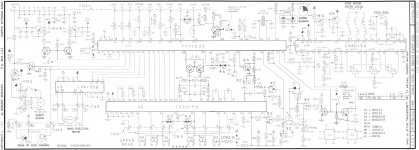
Where the heck should I go now? If ever there were gremlins in a board, this is it. What would cause ejection over and over? I was looking for an "eject signal" or "disk in" pin, but nothing that obvious was in the list. It would really be a shame for this thing to be a loss after all the work I put in to even get it to work a year ago. As usual, I'll take any and all suggestions! Not sure if anyone else has SE schematics for this area, but I cannot find any.
Looks like my 128k logic board referbs are on hold now...
About a year ago, I restored an SE FDHD from a Maxell blast and was pretty darn happy that I was able to get the thing back to live. It included numerous patches, replacing the SCC, etc. It went so well that it has become my main compact. So, I decided to purchase a MacCon from @olePigeon and was all happy to be able to use ethernet rather than PhoneNet LocalTalk.
I pull the logic board, install the MacCon, and re-insert into the chassis. I fire it up. No chime, garbage on the screen. I figure the MacCon is causing some issue. I remove it: same deal. Eventually I figure out that there is some sort of loose or intermittent connection near the middle/by the main logic board-analog board connector that is causing issues because inserting the connector with downward pressure, even when supported from underneath, seems to cause the issue. Pushing back the other way in the area causes a reset and normal function.
I go and touch up the solder on the board connector pins as I figure maybe one of the pins has poor continuity. As I am doing this, I noticed that the lower floppy port connector might also have a bad solder joint, so I freshen up all of those too.
Well, the connector isn't the direct cause of the problem it doesn't appear. However I flex the board and get it to work and figure ok, I'll get the MacCon going and if it stays as-is in the chassis without issue and works, that's fine. Reinstall it all, fire it up. Machine works ok, boots from its SCSI2SD, all that. Insert Asante driver floppy I made. Floppy access seems slow. I get an error during installation and the disk ejects. So I quit the installer, reinsert the disk. It IMMEDIATELY ejects; doesn't even try to read the disk. Now I'm getting all pissed and worked up, so I pull the board out again and hook it up to my test stand with my test floppy drive. Starts up from my BDC disk no issue. I put the board back. Issue reoccurs. Back to test stand. Now, the floppy drive continuously continues to run the eject motor over and over with no disk. Totally baffled now. I then realize at the test stand that holding down the floppy connector at the board socket stops it from ejecting! There must be some soft of board issue there as well! I checked all pins to make sure they have continuity they are supposed to by the Macintosh Family guide. All seems appropriate, and I cannot find any short between pins from the solder job I did.
Where the heck should I go now? If ever there were gremlins in a board, this is it. What would cause ejection over and over? I was looking for an "eject signal" or "disk in" pin, but nothing that obvious was in the list. It would really be a shame for this thing to be a loss after all the work I put in to even get it to work a year ago. As usual, I'll take any and all suggestions! Not sure if anyone else has SE schematics for this area, but I cannot find any.
Looks like my 128k logic board referbs are on hold now...
Last edited by a moderator:
 .
.