


. . . or so I would hope, it can't get any worse than the way they shipped these things. I'm hoping that configuring the airflow as originally conceived by the hardware packaging guy came a lot closer to actually working than the 128's compromise butchered A/B oven configuration.
This is the best I can do after a trip to the store for $1.20 worth of 3" x 4" x 7" aluminum step flashing and four snippets of packing tape after a late dinner.
overview:
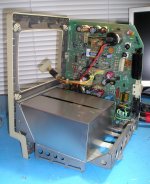
rear view:
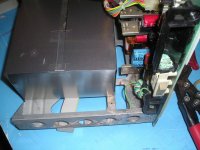
view of the missing internal MacChimney:
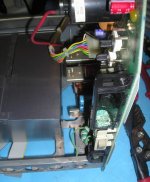
overview of the area that was effectively baffled by the TwiggyBox.
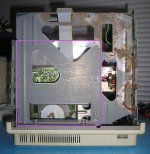
Notice all the extra surface area that was left uncovered on the top of the Chassis when they abruptly switched FDD form factors. The remaining triangle not covered by the FDD controller board doesn't count as blocked, because the back of the Sony Drive mounting cage is open. The TwiggyBox was like a candle snuffer, all the air had to pass through the areas outside the magenta delineated box.
This put the airflow right across the hottest components in the case, at a velocity accelerated as it passed over the transformer, caps and the three heat sinks that surround it in the "missing chimney." At the back of the case, airflow was re-directed past the goodies mounted at the business end of the CRT.
A/B inferno:
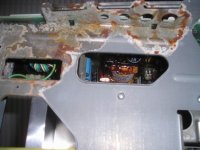
How much hotter must this have run, given that the ductwork intended to enhance its convection cooling budget was suddenly dropped from the spec?
Dunno, I can see the airflow, but that doesn't prove anything.
Who has remote temperature sensing gadgetry, a Compact, and the time to play with a care package to prove me right or wrong?
HEH! }
p.s. here's the real deal for comparison:
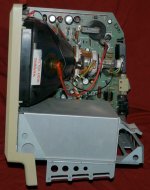
This is the best I can do after a trip to the store for $1.20 worth of 3" x 4" x 7" aluminum step flashing and four snippets of packing tape after a late dinner.
overview:
rear view:
view of the missing internal MacChimney:
overview of the area that was effectively baffled by the TwiggyBox.
Notice all the extra surface area that was left uncovered on the top of the Chassis when they abruptly switched FDD form factors. The remaining triangle not covered by the FDD controller board doesn't count as blocked, because the back of the Sony Drive mounting cage is open. The TwiggyBox was like a candle snuffer, all the air had to pass through the areas outside the magenta delineated box.
This put the airflow right across the hottest components in the case, at a velocity accelerated as it passed over the transformer, caps and the three heat sinks that surround it in the "missing chimney." At the back of the case, airflow was re-directed past the goodies mounted at the business end of the CRT.
A/B inferno:
How much hotter must this have run, given that the ductwork intended to enhance its convection cooling budget was suddenly dropped from the spec?
Dunno, I can see the airflow, but that doesn't prove anything.
Who has remote temperature sensing gadgetry, a Compact, and the time to play with a care package to prove me right or wrong?
HEH! }
p.s. here's the real deal for comparison:
