• Hello MLAers! We've re-enabled auto-approval for accounts. If you are still waiting on account approval, please check this thread for more information.

Thinking of getting a 1xx

Scott Baret

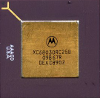
68LC040
Anything in particular I should look for? I haven't really seen much of these since the early 1990s when I used to awe over them in stores.

I may pick one up tomorrow...any model in particular I should look for? Any features? And what do I need to make a 100 into a SCSI device?

 
My personal favourite is the 180 (faster than the 160, and with an FPU), although I have never met a 190. My two run 7.6.1 happily (with 12 or 14MB of RAM). The rub is their displays. The TFT displays of the 180s potentially will suffer from the dreaded and incurable tunnel-vision, and the 160's FSTN is, well, a passive display. But for its smaller dimensions, the 180c's colour display might be the best compromise/avoidance tactic.

The keyboards are good, and responsively clicky. Their NiCd batteries are expectably ratty by now, but being NiCd can be recelled without fear of disturbing any smart (hah!) circuitry inside. The backup batteries are remarkably long-lived. My 160 had been unused for about 12 years, by best reckoning, but its backup was up and running again within a couple of main battery cycles.

de

 
One big advantage of the 190 over any other 68K powerbook is it uses an IDE hard drive. 2.5" SCSI is getting quite hard to come by these days...

 
To use it in SCSI disk mode you will need a HDI-30 to 25pin centronics style adapter (or an adapter plus cable). Let me know if you want a picture - I have a few of these. Most of the 1xx PowerBooks are cool - the 190 is good as you can "borrow" a fair few parts from the 5300 (IR and external monitor card I think).

 
PowerBook 100-series machines are awesome. One thing you've got to watch for, however, is the plastics. Also the hinges. The plastic around the hinges likes to break, and when it breaks, it's pretty difficult to execute an aesthetically pleasing repair, as the screw mounts are usually ripped off. The only recourse, typically, is to use some through-the-whole-assembly bolts or the like. Not pretty, but it often works.

The PowerBook 100 is a bad choice unless you can find some working batteries. I have personally not seen any for sale, at least not with an acceptable asking price. These are lead-acid, btw.

Others aren't too bad. Obviously, the ones the a 'c' at the end are colour. The 170 and 180 models have active-matrix screens. The rest are passive. Most models provide a full compliment of ports, except the PowerBook 150 (which doesn't even have ADB). In fact, the 150's only saving grace is the fact that it uses an IDE hard drive. Unless, of course, you also value a 640x480 screen (as opposed to the 640x400 of the other models).

The PowerBook 190 is a 5300 with a 68LC040 instead of the little 603e; almost everything that applies to the 5300 holds true for the 190, except the fact that the 190 only has passive matrix screens (one model black-and-white, the other colour). Good points about this model include the PC Card slots, the IDE hard drive, IR, and the removable floppy. On the down side is the fact that the power adapter is specific to the 190/5300-series models, so there may be a problem sourcing one.

As for SCSI Disk Mode, you'll either need a special cable, or a little docking dealie (can't find a brand on mine, on one side it says, "HDI SCSI/DOCK Adapter," on the other it has a switch to turn SCSI Disk Mode on or off). eBay would probably be your best bet for finding either one.

 
Ah - I forgot the 150 was IDE as well.

Also, keep in mind that not all PowerBooks support SCSI disk mode. Specifically, the 140 and 170 don't, and possibly some others.

 
My personal favourite is the 180 (faster than the 160, and with an FPU), although I have never met a 190. My two run 7.6.1 happily (with 12 or 14MB of RAM). The rub is their displays. The TFT displays of the 180s potentially will suffer from the dreaded and incurable tunnel-vision, and the 160's FSTN is, well, a passive display. But for its smaller dimensions, the 180c's colour display might be the best compromise/avoidance tactic.
de
Is there any sense among members of how common it is for these early TFT displays to go bad? I would love to get hold of a working PB180, but fear the screen problem. A couple of years ago, I bought an untested Duo 280 which turned out to have the tunnel-vision screen. I absolutely loved the screen for the first few minutes after it booted from cold, but each time, it would be unreadable within 20 mins or so. Eventually the machine was used for parts.

Once bitten, twice shy. I was, for instance, looking just tonight at two untested PB180 units on eBay, but decided not to bid because of the screen failure problem.

But if screen failure were not all that common....

 
Last edited by a moderator:
For some reason I have a soft spot for the original line that was released: the 100, 140, and 170.

I like the 100 because it's the only one that'll run System 6. Beyond that I really like my 170. It's a 6 pound black and white IIci! :)

 
I try to keep my collection to milestones now as I lack the space so that means a PB100 for simplicity, a Duo 2300c as it's the fastest true Duo they ever made and then the 540c as it's the most powerful pre PPC laptop.

 
Back
Top