

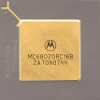
The Guide to the Macintosh Family Hardware indicates that the Mac Plus ROM sockets can handle 1 Mbit ROM ICs and a configuration of two 1 Mbit ROM ICs provides 256KB of ROM.
This is identical to the SE & SE FDHD ROM configuration. Further, the IWM chip used in both the original Macintosh 128K all the way up to the original SE is similar. This same IWM chip is socketed in the SE and can be upgraded to an SWIM chip making it compatible with the 1.4MB FDHD Superdrive.
With that background and perhaps I am rehashing old ground here, but has anyone tried putting SE ROMs in a Mac Plus? More importantly, has anyone tried putting the SWIM ROMs in a MacPlus, along with replacing the IWM chip with an SE SWIM chip? Of course the latter would require de-soldering the old and soldering on a socket. Is there some reason why this would not work? Or is the difference between the Plus IWM and the SE IWM more significant than they appear?
As long as I'm investigating interchangeable parts on a Mac Plus, has anyone tried putting 64K ROMs in the Mac Plus?
Also, the Mac Plus (and the SE for that matter) can be reduced to 512K RAM, basically turning it into a 512Ke with SCSI, by using two 256K SIMMs in one row only. Are there such things as 128K SIMMs to explore a 256K Macintosh, as I've heard was a consideration at one point in the original Macintosh development? I guess 64K SIMMs to emulate a 128K as well would be pushing it, eh?
This is identical to the SE & SE FDHD ROM configuration. Further, the IWM chip used in both the original Macintosh 128K all the way up to the original SE is similar. This same IWM chip is socketed in the SE and can be upgraded to an SWIM chip making it compatible with the 1.4MB FDHD Superdrive.
With that background and perhaps I am rehashing old ground here, but has anyone tried putting SE ROMs in a Mac Plus? More importantly, has anyone tried putting the SWIM ROMs in a MacPlus, along with replacing the IWM chip with an SE SWIM chip? Of course the latter would require de-soldering the old and soldering on a socket. Is there some reason why this would not work? Or is the difference between the Plus IWM and the SE IWM more significant than they appear?
As long as I'm investigating interchangeable parts on a Mac Plus, has anyone tried putting 64K ROMs in the Mac Plus?
Also, the Mac Plus (and the SE for that matter) can be reduced to 512K RAM, basically turning it into a 512Ke with SCSI, by using two 256K SIMMs in one row only. Are there such things as 128K SIMMs to explore a 256K Macintosh, as I've heard was a consideration at one point in the original Macintosh development? I guess 64K SIMMs to emulate a 128K as well would be pushing it, eh?




