
• Hello MLAers! We've re-enabled auto-approval for accounts. If you are still waiting on account approval, please check this thread for more information.

Ground Fault Circuit Interrupt - cheap fire insurance for vintage collection etc?

Trash80toHP_Mini

NIGHT STALKER
68040
Was just looking at these for the A/V rack in the bedroom  .  .  .
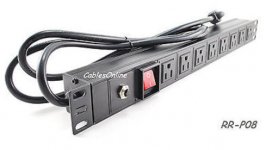
Rackmount_Power_Strip.jpg

.  .  .  and thought about the gang box power distribution build I'm implementing for my collection. I've been planning GFCI/GFI implementation all along as a matter of course, but started thinking seriously about it just now. I've been idly wondering about the safety issues involved in running the SE/30 in WiFi server/bridge mode for the collection and it's suddenly in sharp focus.

Ground fault protection along with conventional surge protection for all this old electrical crap seems like a good idea. Whatcha think?


 
If your worried about fire, an arc fault interrupt breaker may be of value. These trip if an arc condition is detected in the circuit.

 
A GFCI outlet won't stop an old Mac that has an electrical problem from having that electrical problem, unless electriicty flows in an unintended path, back into the outlet, for example. I don't foresee GFCIs, say, preventing an old all-in-one Mac with worn components from, IDK, catching fire or having another capacitor fail, or shutting down power to the machine if that does happen.

The primary reason for GFCI outlets is to put them near sources of water so that if a short occurs, it will turn off that part of the circuit.

 
It doesn't have anything to do preventing failures in old Macs, it's for detecting such things. Code requires protection around "water hazards," but that's not the point here. A GFCI trips for any kind of short circuit. Current need not "flow back into the outlet," the GFCI detects differential in outflow and inflow of current at milliamp levels on hot and neutral in reference to ground. There are definitely situations where they can prevent fires in the case of electrical failures.

As I understand it, if there were to be a short in something like the soft power circuitry of any given Mac plugged into the protected outlets, the GFCI trips, shutting down power to everything plugged into the circuit. This happens incredibly quickly as compared to circuit breaker protection.

@IIfx: AFCI is an interesting suggestion. Combination breakers I've seen, but I'll have to look into something available to install in my extra long modular gang box setup if it proves to be worthwhile. I've no idea if an electronics short would trip an AFCI, but it's probably a reasonable bet the GFCI will.

 
Also known as a Reverse Current Device (RCD), correct?

They'll also stop current to a short fast enough to prevent you electrocuting yourself into cardiac arrest, so for my mind, they're an essential piece of safety equipment for anyone who works on their own gear.

 
Never heard it called that, but yep, GFCI reaction time is a matter of milliseconds, protecting people, not just equipment.

I was looking into AFCI, but it appears to be geared more toward detecting arcing at the much higher energy levels of electrical connections rather than mere "electronics."

Ran across another one that detects a high resistance heat buildup that doesn't arc, but I'm falling asleep.

edit: is RCD related to 220v mains down under?

 
Last edited by a moderator:
I guess there's no reason not to, but if you're working on your own equipment, I hope one of the starting processes is... unplugging it?

Is a short circuit in a Mac's power system (or anywhere that's significant enough to cause damage and trip a GFCI) common? I'm having trouble imagining situations where this might happen outside of basically things melting or a part (or liquid) physically falling inside the machine and landing on some traces or exposed wires or connectors.

If so, perhaps the answer here is not to be using a vintage system as critical infrastructure. Especially a compact mac. Especially one that, if I'm remembering correctly, can't cut power to its display as an energy saving feature. If a Mac LC (II/III/475, etc) will do what you need, I'd say that's a machine I'm confident in saying you could probably leave running on all the time with no trouble.

 
GFCI just looks for a difference between the outgoing current and returning current 5mA is enough to trip it. So if something is shorting to another circuit then current is being lost and the power is cut.

A burning mac will keep on running until something burns out the wiring to kill the circuit or you trip a fuse (over current protection).

GFCI would be nice for when you spill your Mountain Dew into your IIfx for example.

 
I would be extremely surprised to have a ground fault on a computer, this is more common on circuits themselves if the outlet has been damaged, poorly wired, or if an appliance is dropped in water and creates a short circuit. If electronics catch fire, it is usually because they overheat or because a battery is shorted (like on smartphones and laptops), two things that a GFCI would not prevent (battery is a chemical reaction).

Surge protection is important though, as it can do damage to the components AND the PCB, so if anything, you want to protect your Mac more than your house. Also, since those old computers had to be turned off when not in use, unlike modern ones that "sleep", the risk of an electrical failure when not using it is low.

 
Soft power circuits never sleep, gotta flip the switch on the Surge Protector strip to fully power down Macs with that feature.

p.s. that Mountain Dew image gave me the heebiejeebies! :eek:

 
is RCD related to 220v mains down under?


Doubt it, probably just a difference in terminology.  Also I was mistaken before, they're known as Residual Current Devices, not Reverse.  Which lines up with Unknown_K's description above.

if you're working on your own equipment, I hope one of the starting processes is... unplugging it?


And in a perfect world, nobody would forget ;)   Meanwhile, for those days when I'm an idiot, a little bit of idiot-proofing goes a long way.

Example - I left an ATX PS on my bench on soak test, forgot about it, picked it up to move it aside.  It had a short to the metal case, as it turns out.  I was still twitching 24 hours later.

tldr accidents happen.

 
Last edited by a moderator:
^ That's the kind of situation with a GFCI (RCD) should've helped. The chassis on an ATX PSU is almost always directly grounded and the short to case would've tripped it over.

 
.  .  .  and caused far less damage than the breaker on a standard power stripping farther down the fault's timeline.

220V SMARTS at the very best! What kind of amperage at a wall outlet are we talking about down under and across the pond? When I think of 220V here it's at loads meant to run cooktops, clothes dryers, big AC units, my welder and mulriple pony output stationary tool motors.

I've recently seen several pics of your shrouded outlets, that settled a considerable bit of my heebejebies re your mains setups.

 
Back
Top

