
That would be an honor! HAhahaha!This in particular got me good.

-
 Hello Guest! We're hosting a challenge to welcome vintage Intel macs to the MLA during the month of July! See this thread for more information.
 -
We've made some quality of life improvements to the Trading Post. More info here.
You are using an out of date browser. It may not display this or other websites correctly.
You should upgrade or use an alternative browser.
You should upgrade or use an alternative browser.
Bitcoin Mining on Mac Classic
- Thread starter DrewyNucci
- Start date

I felt like there was something missing here... RetroChallenge forum, using an LLM to write a coin miner for 68k Macs....
I figured it out. This needs to leverage The Cloud, and have a 3D interface (maybe using 3D glasses? 3D might be tricky on a monochrome screen though. Maybe by splitting the screen in two and putting a divider down the middle?).
I figured it out. This needs to leverage The Cloud, and have a 3D interface (maybe using 3D glasses? 3D might be tricky on a monochrome screen though. Maybe by splitting the screen in two and putting a divider down the middle?).


Like a stereoscope from the 1800s!3D might be tricky on a monochrome screen though. Maybe by splitting the screen in two and putting a divider down the middle?).


You are literally on a forum about old computers… not really sure what your point is here.you are a huge nerd


Crypto is most assuredly not for me, but I respect the dedication and thoroughness. A few questions: what is Mac OS 6.8 (do you mean 6.0.8), and what is the screenshot from? (It's not from the Mac Plus that you mention, that's for certain.)
I think some qualification of "slowest Bitcoin miner ever" may be worth doing --- you could well be the slowest miner directly connected to real mining pools, but the work of Ken Shirriff is interesting to consider all the same.
Depends on the crypto. Bitcoin was (is still) a proof-of-concept. It literally does nothing because the calculations performed were supposed to be representative of real work done. The blockchain was intended to be an immutable ledger and proof you did the work, and instead of using Bitcoin, you'd use something actually useful like folding proteins, solving complex equations, distributed computing (AI, render farms, et al), hosting, cloud storage, etc. You know, actually contribute something. It'd be a way for someone to be compensated for "work" completed by the computer, provide proof of said work, and then be compensated for it.
Unfortunately Bitcoin just ran away even though it's pointless. It's why Bitcoin is 100% speculation and a monumental waste of energy. There are some cryptos out there that aren't forks/memes of Bitcoin that actually are representative of real work. The downside to those is that their prices tend to be tied to whatever the hell Bitcoin is doing. So if the "crypto bubble" ever pops (probably not, but we can hope), Bitcoin is going to drag all the legitimate cryptos down with it because most of the investors don't understand the difference. They're crypto bros, not engineers.
@olePigeon isn't that the same with any fiat currency.. when you drill all the way down any fiat is only worth what an army is willing to fight for and defend... (this includes USD btw)
I don't agree. Bitcoin is 100% speculative, while a fiat currency is backed by the country's ability to pay its debts one way or another. But this is an argument for a different thread. I didn't mean to hijack it.@olePigeon isn't that the same with any fiat currency.. when you drill all the way down any fiat is only worth what an army is willing to fight for and defend... (this includes USD btw)

It doesn't though --- literally all crypto is most assuredly not for me.Depends on the crypto.
Reminds me of when cryptobros invaded r/crypto (a cryptography subreddit). Both cryptography and blockchains have their uses. Cryptocurrencies... I'll also leave that discussion for elsewhere.It doesn't though --- literally all crypto is most assuredly not for me.
I have to say... I AM morbidly curious about whether you can use AI to create a piece of software that can actually mine bitcoin on a 68k Mac in a way that doesn't cost orders of magnitude more to run than the bitcoin value it generates. Bonus points for calculating how much it cost to train/run the AI queries to generate the code in the first place.

@adespoton No matter how much AI you throw at it, mining bitcoin on anything but the most efficient modern hardware costs more to run than the bitcoin value it generates.
This would probably involve an unexpected demonstration that P=NP or perhaps of some other mildly notable result in complexity theory. In which case you have, all of a sudden, a few new preoccupations that extend just the slightest bit beyond using an obsolete computer to obtain bitcoin.I have to say... I AM morbidly curious about whether you can use AI to create a piece of software that can actually mine bitcoin on a 68k Mac in a way that doesn't cost orders of magnitude more to run than the bitcoin value it generates. Bonus points for calculating how much it cost to train/run the AI queries to generate the code in the first place.
Among them: quite a lot of crypto (now also in the "-graphy" sense) will most assuredly not be for anyone.
(yes I know about one-time pads etc. thx)
ETA: To elaborate beyond the snark: right now, even the most efficient algorithms for performing the arithmetic at the heart of bitcoin just require a certain minimum number of operations. If you count the time and power it takes to accomplish that minimal set on any 68K machine, you will just not break even (or get anywhere close). It is unlikely that there is a shortcut past doing these operations unless some of our most commonly-held (but as-yet unproved) assumptions about hard-to-compute functions are wrong. A lot of modern cryptography depends on these functions being very difficult to solve; if an AI discovers some kind of workaround, then some of the most fundamental infrastructural reinforcements of our online world are immediately compromised.
Therefore I'll take the bet on the side of "won't happen", since if it does, you'll have to somehow cash the cheque before the hackers drain my account along with everyone else's...
Last edited:
Essentially, a prerequisite to accomplishing this task is discovering that a) you can use a 68k chip for quantum computing somehow and b) there's an appropriate algorithm available... which just incidentally would crack pretty much all classic cryptographic algorithms so fast on more modern hardware that "cryptography" would no longer really be an appropriate name for this mild irritant of mathematical obfuscationThis would probably involve an unexpected demonstration that P=NP or perhaps of some other mildly notable result in complexity theory. In which case you have, all of a sudden, a few new preoccupations that extend just the slightest bit beyond using an obsolete computer to obtain bitcoin.
Among them: quite a lot of crypto (now also in the "-graphy" sense) will most assuredly not be for anyone.
(yes I know about one-time pads etc. thx)
ETA: To elaborate beyond the snark: right now, even the most efficient algorithms for performing the arithmetic at the heart of bitcoin just require a certain minimum number of operations. If you count the time and power it takes to accomplish that minimal set on any 68K machine, you will just not break even (or get anywhere close). It is unlikely that there is a shortcut past doing these operations unless some of our most commonly-held (but as-yet unproved) assumptions about hard-to-compute functions are wrong. A lot of modern cryptography depends on these functions being very difficult to solve; if an AI discovers some kind of workaround, then some of the most fundamental infrastructural reinforcements of our online world are immediately compromised.
Therefore I'll take the bet on the side of "won't happen", since if it does, you'll have to somehow cash the cheque before the hackers drain my account along with everyone else's...


Twist the code into pretzels so it'll crash an emulator but not real hardwareNot sure how you'd enforce it, though, if someone could just run 10,000 emulation instances.
This brings to mind old BBS ratiosHow about a VintageCoin that can ONLY be mined on a machine running between 1 and 40 MHz.Make it a proof-of-stake for hosting a file sharing server with vintage and retro materials.
Not sure how you'd enforce it, though, if someone could just run 10,000 emulation instances.
You could have a federated "coin" that provides you a certain amount of access to federated sites. Of course, these days that'd be artificial scarcity, as there's generally a glut of bandwidth to share between vintage computer users.Ooh... this actually presents a real use! Added proof of work could be in implementation of functions known to be non-working in emulators. So if someone successfully implements (and shares) emulator improvements, that's more vintagecoin availableTwist the code into pretzels so it'll crash an emulator but not real hardware


How much memory do miners need? The Mac Classic is capped at 4MB. I’m not sure that what we’re doing here is even possible on a 68000 Mac. Use your hard drive as swap space I guess but now you’ve got to build your own virtual memory paging system.
Window dimensions won’t fit a classic Mac’s 512x342 either. I know it’s AI code but man I don’t publish anything to GitHub until I’ve at least run it myself.
Window dimensions won’t fit a classic Mac’s 512x342 either. I know it’s AI code but man I don’t publish anything to GitHub until I’ve at least run it myself.

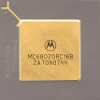
Some back-of-the-envelope math says this statement is literally true.…that won't finish before the heat death of the universe...
At current mining rates, that “20H/s 8 MHz 68000” would take about 1 trillion years to mine a single bitcoin.
Mining rates aren’t static - the computing power needed to mine one bitcoin increases as more bitcoin are mined. Which means a Plus/SE cannot possibly keep up. It would take such a system literal infinite time to mine a single bitcoin.
Infinite time? you just specified a finite amount of time, 1 trillion yearsIt would take such a system literal infinite time to mine a single bitcoin.
Similar threads
- Replies
- 24
- Views
- 4K


- Replies
- 15
- Views
- 5K
