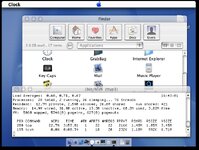
This thread is about Dingusppc, but I do want to share a bit about what I've seen with Copland, as it may be useful to others.
The "non-debug" builds don't technically require a 2nd machine, but they still will crash, so one is desirable. The debug builds will constantly call the debugger with warnings and possible problems, so one is required.
Since all of the Copland's we have were unfinished, they all have serious bugs, such as corrupting their own file systems over time, for a start. There are a lot of things that were half-implemented or never completed, so thosel cause errors or crashes on purpose, to notify the apple developers that something still needed to be worked on.
The result is a "usable" system, to at least some extent, for as long as we keep in mind what it really is. Because of the constant crashes and debugger calls for the developers, it is a "bleeding edge", not even alpha quality, or at at was, at the time.
I've been able to use it enough to run a version of CodeWarrior, and build "new Copland applications", but personally think it is a high cost low benefit situation. Compared to Windows 95, Apple was only halfway there, and only would have gotten there with Gershwin, apon which work never even started.
----
The threading model is nice, for that day and age, but we ended up getting most of what it gave with multiprocessing services in MacOS 8.5+. I haven't looked, but have heard Apple even recycled the api's. Memory protection and virtual memory are, in theory, much more sophisticated than the classic MacOS we did get, but pales in comparison with even Windows 95.
The "blue box", same name but not the same as "classic" in MacOS X, is stuck in a single thread, and because they didn't have time to reimplement the toolbox and factor it out to be thread and memory safe, all "blue" tasks, which mean anything using the toolbox, is stuck in a single address space. Like MacOS 8.5+ you launch threads, but they can't call the toolbox. Memory is "protected", but all toolbox using apps will still happily stomp all over each other's heaps.
In the Copland documentation, as a selling point, they state in these cases solely the "blue box" would need to be restarted, so a "crash" wouldn't bring the system to a halt. It would just be a hiccup, not unlike restarting Classic in MacOS X. If this is possible in the builds we have, I do not see it doing that, so it may have just been on their TODO list.
----
So, what do you get? If you're writing "new code", unless you refactor your UI to use the new Human Interface SOM-based api, you are using "legacy" toolbox calls, which are identical (that was the point) to System 7.5, other than bells and whistles like themes and navigation services, which we ended up getting with MacOS 8.5+ anyway.
You get a very interesting kernel, from a technical standpoint (the io subsystem is a neat design....in theory), you get all the toolboxes split out so they are explicit shared libraries, and no longer a monolithic mystery. You get a lot of things, from a developer standpoint, that we ended up getting in 8.5+. Then there's the new SOM Human Interface, which is unlikely anyone will ever write code for.
----
In conclusion, in a fantasy (or maybe reality...these days...sigh...eh?) world where we used AI to "fix all the bugs", we'd still need to finish many missing parts (I haven't even looked at the state of networking). What we would have would arguably be "better" than MacOS 9, in many ways, but still inefficient and primitive compared to any modern system. The threading, virtual memory, protection, io and more ,were quite advanced, but only for that time
I'm still going to "poke at it", because it is a very interesting Apple cultural artifact, and "technically" interesting, but I am realistic about what this beast really is.